Showing posts with label History of Fi. Show all posts

Friday, 21 January 2022

Revisiting own History – The classic Leak TL12+ amplifiers


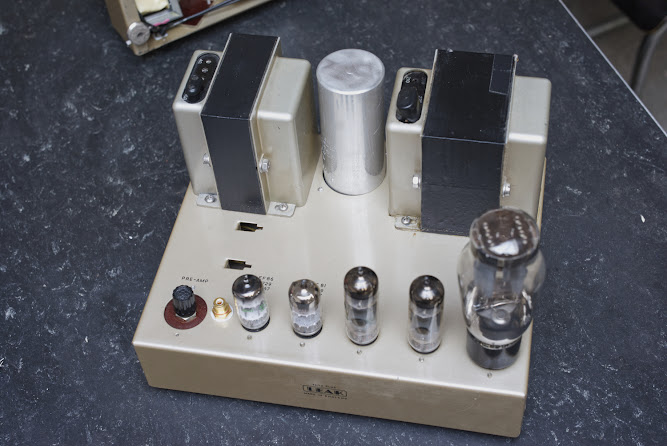
As already widely shown in my earlier articles I collected in the early 1990ties during my London time a whole lot of classic Leak tube amplifiers. Foremostly I remember one visit in London in 1992 when I did buy an exceptional lot of amplifiers from London dealers. On the way back to Germany my car got stopped from French custom officers because of its obvious visible overweight in its trunk, the rear wheels already were deep hidden in the chassis with an extra 15º camber. I will never forget the officers face when I did show him the tight stacked amplifiers, he had no idea what he was looking at. I don't exactly remember, but it must have been around 6 to 8 pairs of this model TL12+ and several Stereo 20 and as well some pairs TL10.1  and TL12 point one's. I tried to explain that these are historic audio amplifiers, but he hardly could believe my words looking at a wall of golden chassis.


The classic late 1959 Leak TL12+, here already with RCA-socket and input pot.


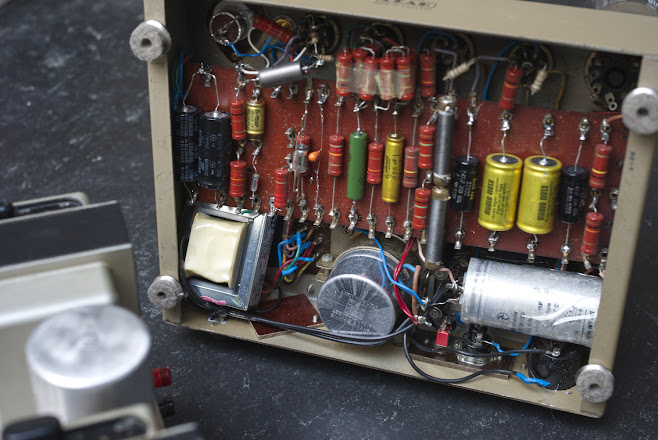
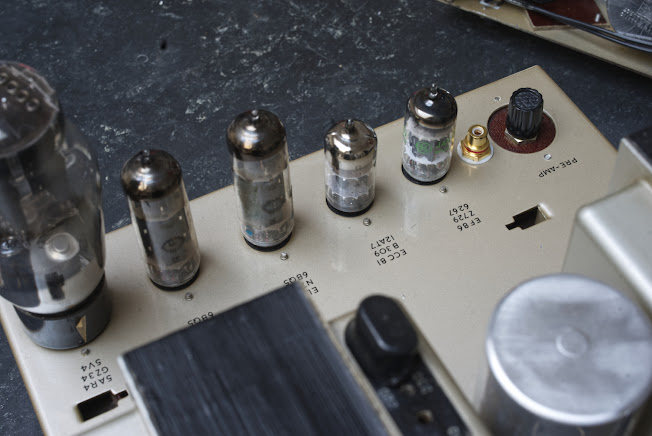
The shown pair is one set of this batch. I did restore all of them to my highest possible standard these days. In particular this pair got the best care because of the rather rare color "champaign" and with the aim to keep them for my own collection. As regular treatment I replaced the electrolytic filter caps to oil caps. Here the old electrolytic content needed to get emptied in order to reuse their cans for originality and color with new caps glued in. Generally all coupling caps where replaced to oil caps, a expensive step these days because the only modern source for such was Audio Note, who cared about the distribution of Jensens Audio Caps, a good 20£ investment for each value which added alone to 200£ for a set. All carbon composition resistors got exchanged to new German Beyschlag 2 watts carbon composition types, each around 2 € only available in 10er belts these days. The cathode bypass capacitors generally got changed to bipolar tone frequency caps, which mainly where used as crossover parts in speakers. The religion in these days was the use of triodes in all stages, so I always changed the input stage from EF86 pentodes to ECC83 triodes in order to refine the soundstage and to reduce the input amplification factor, which is with all Leaks extremely sensitive. I brought generally the power stages of these push-pull designs to semi triode operation of the EL84 tubes. All these steps were introduced in order to achieve with this little amps a much more sophisticated and smoother operation, in contrast to the impressive, but a bit too cheaky performance of the original version. The reduction of output power from 12 watts to hardly 4 watts in pseudo triode operation emotionally perceived with efficient speakers (better than 96db) as to be a even better drivability. 


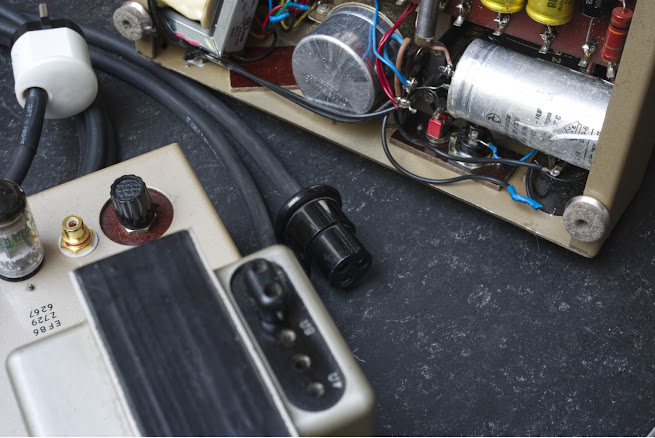
Close up of input stage in foreground, in background whole lot of modifications at the filter stage with smoothing choke (at left) and fuse holder, switch (at right) and power cord.


As some might expect the days weren't far that I decided, with almost every Leak model in daily use, the most of them in several versions, to get rid of some doublets to save space and money. Some friends of mine got within this years involved into my passion and became interested as well to use tube amplification in combination with Tannoy speakers. So I sold some amps from my collection to them. As reported in my last entry a Leak Stereo 60 of my early collection revisited me unexpected end of last year. This example found a caring new home in the meanwhile. Shortly before New Years Eve another friend visited me and brought another former pair into service, which acted for 30 years a long term companion to his Tannoy Lancasters with 15'' Monitor Golds for him. When I started to inspect this pair, I realized what 30 years of rough use with several house moves and more or less permanent plugging and unplugging can do. They were completely rocked down. Loose contacts, open wires, leaking capacitors, wax dripping from transformers, tubes run down to 20%, in one an almost black ashed rectifier tube showed the remnants of an unexpected firework, – he had treated them almost to unusable wracks. My friend decided to spend good money for another life and a total revision. At my first restoration in 1992 these amps were already 35 years old, now added on to another 30 years. I will try my best to give them another third life for the next 30 years. Maybe these little wonders will find one day when I already will be passed away the next owner who might bring them into a fourth period of living  –  this is what I will call sustainability – not the highly acclaimed class G digital amps to be so.


View of the complete mainboard, just at top edge underside of pot and the filament symmetry element


For this reason to open up for a new future I decided to change some principles I had 30 years ago. I always took extremely care to keep mechanical originality of the amplifiers, which was meant not to drill wholes or remove unused components, like the octal sockets for chaining further Leak- or other components. Today or even better tomorrow nobody really will use a Troughline tuner or a Varislope preamp, so contemporary preferences for practical use are getting more important instead of originality. A better control of the input signal, in particular with modern high output components (min. 2V or more) like preamplifiers, computers or digital streaming clients, – more or less hum- and hiss free operation and of course still the smooth and dynamic soundstage are relevant for the aficionado.

So I needed to find mechanically and electrically matching filter capacitors as paper-in oil types, not an easy job even with eBay within such sizes. Pots, switches and simple things like fuse holders are more and more difficult to be found in well known high quality, foremost made for military use in the 1970ties.


Knob inlay made from real embossed calf leather matching luxury expectations...


The Leaks got now smoothing chokes (8H/100mA) in the filter stage, NOS mil spec input potentiometers, perfect RCA-sockets, switches, optimized AC-cords and of course a set of best possible NOS tubes in every stage. So equipped this little pair will do a perfect job in the coming years and play now in the same league where best handmade tube amplifiers like Shindo, Thomas Mayer or others are bought for in difference to modern chrome monsters made to match Asian expectations. 


60 years of technological time shift to play music


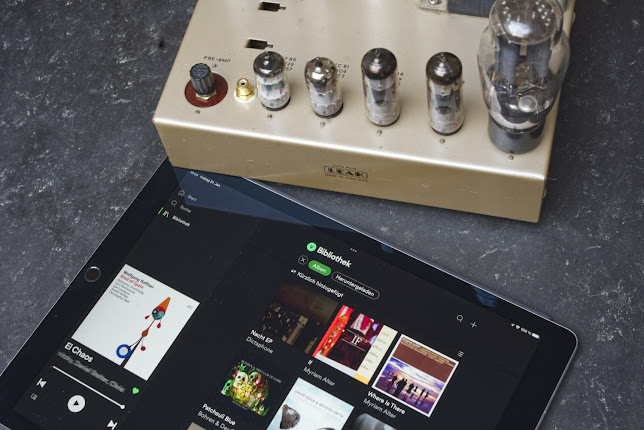
Now this little amps are ready for the time which is already there, a time were music streaming has overtaken the music market and digital components are feeding their playlists into such ultra analog audio chains. After 10 years of wireless music stream into my own chain from my notebook as to be the 'jack of alle trades'. I did spend at the start of 2022 myself an actual iPad with 1Tb storage to be solely my comfortable music juke box to play from cloud services as well from my own digital collection at a finger touch. 

Stay healthy, it might find an end sooner or later, Volker


Tuesday, 24 May 2016

30 Years of Revelation VII – The Resume

Hello fo everybody reading on in my blog.


When I temporally did end last year this series of articles with an interview with Keith Aschenbrenner, I did hope that my time in Hong Kong will extend my knowledge about the Asian audio culture, but it didn't come out as I expected. My time in Hong Kong did not deepen my insight into Asian audio practice, this city seem to be focused generally into other values and times. So I will try to continue where I did take a brake and deliver now the resume.

As already in several former articles stated, Japanese aficionados were in a foremost stage the founders of the vintage audio culture with more than 40 years of extensive practice. Japan was the pioneering Asian country of electronic mass products in the 1960ties. Their typical cultural behavior in a tireless seek of perfection have forced a trailblazing economical success at a global scale. This success entailed on the other opposing hand an incomparable range of handmade specialist audio products employing a stage of expertise incomparable to second. Enabled by the respectful highest degree of mastermind culture in order to find the last and tiniest compromising aspect in a given audio playback system.
Japan was followed by the Korean economic and cultural catch up, where audio enthusiasts did try to follow as well in the same fields of expertise. Almost time contemporaneous attended by some exclusive audio entrepreneurs in Europe (F, I, GB, D) while in the same time almost completely ignored in the motherland of its technical origin the US, only noticed by a handful of radical enthusiasts (NY Triode Gang).

Today the situation is more comprehensible. The Japanese movement laid once the track for a highly sophisticated organised replica industry of former unavailable vintage equipment made at Chinas working bench. Focused to form a advanced reproduction process copying original products from the US-brand Western Electric and their subcontractors, aimed to be an economic business for luxury needs. Today almost any necessary product for a highly collectible and advanced historic cinema set up is available from several Asian companies directly from the storage shelf. All products are made as faithful precise replica of the vintage original or even made as a revised product. When the interest into historical products started in the early 1970ties, the most Japanese forerunners needed years or even decades to find out about things and important interrelations; and of course first they needed to find the vintage products for a first hand personal evaluation. Modern Chinese production processes in combination with Japanese and Korean supervisisional knowledge about the original products and their inherent qualities, have made possible a reissue production line of such quality level.

The typical Western Labo Co. set up.

Companies like Line Magnetic, PandC, Western Labo, Victor, Kanno, GIP, Wu, etc. are all courting the same small group of customers, who are willing to spend a 50 to 100k amount (for a start) into a catalog of seamless dedicated replica products based on the 1930ties WE-cinema-sound-systems with all-time favorite repeating same components:

1. large wide band horn transducers (WE 12, 13, 14, 15, 16, 21, 22 /A replicas or similar other horns)
2. large open baffle or dipole low frequency extension cabinets (incorporating TA4181, Lansing 15AX FC or other similar Jensen FC replica speakers or even arrays of them) with more or less
3. the same tweeter (WE 597/A).
4. Up to personal taste of the customer and available room for the dedicated listening space, different amplifier conceptions are available to match perfectly (here legend started with 300B tubes). Several replicas from Western Electric originated amplifier designs, like WE 89A, 91A , 121A up to completed cinema racks (WE41A) featuring 211 and 805 PPP tube amplifiers are repetitively copied for a common sales strategy.
Any legendary WE-transformer from history is reproduced already, rewound to original cores (171A, 618A/B, etc.) rigged out at electro junkjards in mainland China. Of course on sale are replicas of all typical dedicated power supply designs, like Tungar, Selenium or tube regulated are offered for a authentic completeness and aural superiority. If you only take the aural distinction of tungar low voltage power supplies to the fields coils of the 597/555 drivers in mind, it is almost a sensational effect on itself. Once aural internalized you will not do without anymore...
Every vintage exceptional product you might need for such a sophisticated sound texture is on sale by now,  – you don't need to research anymore for yourself, no more need to find experienced knowledge,  nor there is a need of building diy skills for absolutely unavailable products.  – You just need money and a dealer of your trust. Google will do the rest...


WE91A replica with original WE cores by PandC

GIP 12A horn replica with  GIP 555/A receiver GIP 597A tweeter 
A incredible speciality of Western Labo in Japan is the improved 21A horn design,
with 84 x 79cm opening and a good 40 cm longer development, the 21A is
the almost perfect match for wide band operation in typical living room sized environments.
It is extending the lower frequency end of the 22A to useable 150 Hz and since its longer
development up to 6000 Hz at its physical end of performance (with 555/A receivers).
It seems to be almost global consensus within a experienced community, that such historic given arrangements with Western Electric inspired remakes are the state of the audio art today. Of course they mark the top of any audio desire, since the originals never have been available to a private market, the most components were even in their professional time only available as a rent product.
To my own references from 30 years with vintage tube based audio equipment, I must state these wide band horn installations with 555 receivers are unsurpassed in any audible discipline. When absolute refinement in tonal realism, dynamic distribution and natural audio perception is to be aimed, there is nothing coming even close. Period!
Any paper cone based loudspeaking unit made through such 70 years of history, independent of its magnetic technology, does not have the slightest chance, in physical and as well in audible terms to match the sparkling naturalness of tonal resolution of these first wide band horn loudspeakers. If you have got the matching amplifying devices, you will be rewarded with unparalleled obsessive attitudes.

Line Magnetic LM555 mounted at LM22A horn

These qualities of wide frequency horns seem to have widely established in global scale. Those users with elaborated listening experience prefer loudspeaker concepts without limiting enclosure types. In audio history different design conceptions did establish in order to use the backward radiated waves of the cone to extend the total low frequency energy; like backloaded horn enclosures, enclosures with conducted port or reflex enclosure types. But even with large sized and damped sealed enclosure types unwanted energies together with unfavorable effects to the cone are always present. All this common used concepts are more or less a hefty compromise to a quality intended lf-response. The open baffle concepts from the early beginning show up with a tremendously improved performance and by far with lowest negative side effects to the sound structure. They are fast and open, they are room covering, but not very efficient in terms of radiated energy, for adjustment you might add cone size for improved efficiency. If you don't have the room for such a huge installations with large woofer (arrays), you better should forget about a historical cinema installation for your own.

A typical Western Electric cinema based installation shows up with properties unknown to ordinary commercial audio products. Because of their time related technology, they were once constructed with a main focus to optimize the acoustic-physical efficiency in mind. They are aimed to overcome the typical limitations of 1930ties audio performance, i.e. limited power output of the existing amplifying devices. They needed to perform in cinema halls with seats for several thousand people. So arrays of extra efficient horn speakers, have been for a long time the only technical solution to  succeed with a handful of watts of output power. The physical approach intended to resolve the best possible loudness energy ratio together with the best audibility to a given output power. The early ingenious solutions incorporated highly efficient mechanical transmission systems to couple the electro dynamic movement/energy of a small scaled coil to a maximal amount of air. Customized to different tasks, i.e. long low frequency or short high frequency waves were different treated. The low frequency drivers are in a foremost stage the graves for the supplied energy. The size of the radiating  cone decides about its lowest transmitted frequency, its physical weight determines the necessary electrical energy input. As everybody knows the size of the baffle limits physically the longest wave where the radiated wave parts from both sides of the cone distinguish each other. With a funnel like shown here from WesternLabo a particular part of the radiated frequency will be transmitted to better ratio, here it might be 1:1,5 for frequencies upper 100hz. With a 18'' woofer such a system brings a certain lot of air into movement, much more than the driver alone.
When you look at the immense ratio of the wide band horn development between opening and mouth you will find a ratio of one to several thousand. This system covers not only the most important and delicate frequency range, it determines decisively the tonal character of the whole installation. The extremely light weight diaphragm/driver mechanism 555 is designed to cover a frequency range of 100 to 7000 hz. The mounted horn development (like WE15a 100-3000hz, WE22a 250-6000hz) with its limiting parameters decides if such a horn can cover the complete range of the human voice or just the range of a  common trombone. The immense mechanical amplifying ratio of the horn development animates additionally a huge amount of moved air into the sound structure, a tremendous lot more than modern small scaled based speaker systems will do. I believe the amount of  animated air is the most typical and shaping effect for their incomparable sound structure.
This rarely iluminated aspect is to my personal experience the most important reason for the unique sensation of trueness and natural scaled instrumentation. To my perception this effect creates a fundamental physical difference into the final soundstage, a extra spacious and defined stage of sound. As well the listening ability is a lot easier at the ear than with small scaled drivers with long stroke radiated wavefronts, known from typical hifi speakers, but as well from professional studio monitors. Even here, when the overall sound structure might be extremely similar in tonality, the physical definition of the projected sound stage is completely different. The loss of air between instruments is a remarkable criteria.


A typical Western Labo set up in detail

Today ownership is not anymore a challenge, it is just a question of money and room. If you can accept to spend 2 to 4 K $US for shipping costs from Asia to Europe or into the US, you can order such complete sets directly from several Asian homepages. Certain manufacturers and companies are selling more or less the same replicas in similar qualities and confusingly same appearances for more or less similar price ranges.
Alternatively in Europe if you are adventurous and gifted with hand craft you can ask for some custom made support for the woodwork here ore here with additional options for necessary decided equipment. For all others it might better get in physical contact first with your more or less locally operating drug dealer. There you can get some real impression of these favourite products, of course coming along with additional charges but as well guarantees. In Germany you will be perfectly served by a institution and pioneer for such questions: Keith Aschenbrenner from Auditorium 23. Together with a highly extended amplifier range from Shindo-Labs and some unique own products like LM-based speaker designs, unique stepup-transformers, tonearms and cables, you will be opposed with several Line Magnetic components from the here shown classic WE-replica-speaker-portfolio. Within the American continent there will be Jonathan Halpern‘s associated network of tone import dealers would be happy to do serve a similar request for the interested aficionado.


GIP 7331 with TA4181 and GIP 597 and GIP403A with 594A. The dipole enclosure for the 18'' field coil low frequency radiator

The resume is sobering, after 80 years of audio development (?!) and certain stages of redefinition of state in audio technologies, like its included 30 years of digitalization of the music signal and by now the superior panacea of digital signal shaping with its benefits for consumer claims and applications, the earliest beginning technology has never been matched in overall performed quality again.
The first wide band receiver unit, the WE555A is by far the best sounding compression speaker mechanism for wide band use ever made and will be the central component in such a set up. It is the key component and performs by far better than any of his technically glorified successors. The simplicity of such a acoustic principle, the small lightweight diaphragm acting as wide band unit, mechanically amplified by a carefully designed exponential horn development to cover the widest possible frequency range (again WE 12/13/14/15/16/22/A) is by far the most delicate, refined, fast, naturally detailed and dynamic loudspeaker principle ever made. The WE597/A is its perfect hf-extending companion for the best high frequency response money can buy, as its lower end counterpart the 18'' TA4181 FC driver will perfectly round up the lower end. Such sets are a extreme statement of input and as well a challenge for the performed music material.

The most enthusiasts of such sets are hardcore analog addicts with a deep conviction about the supremacy of vinyl. For my own conviction and belief I must state here again, that just such incomparable qualities of the here described sets have shown myself the first time in my life the limitations of vintage analog recordings stored on vinyl. For a long time I did ignore completely the outstanding qualities of modern digital recordings (past 2000), – it may not be too influential, if you put five-figure euro sums in first released vintage vinyl jazz records – you must suffer from a disease well spread in such circles. In order to feed my own hardcore analog addiction before 2010 such first releases of vinyl  from the golden age were the only acceptable program material. Personal wrong interpretations of unlimited varying recording qualities in terms of broad tonalities, captured dynamics and refinement of resolution did confirm my completely wrong interpretation of richness and realism. The exceptional smooth, refined and natural response of such historic horn installations with its incomparable amounts of balanced micro textured informations, showed me first how wrongly I did misinterpret the typical inherent variations of vintage recorded vinyl. This experience made a completely new evaluation of digitally recorded music for me five years ago possible again. I had made my basic experiences with digital music at the beginning of the 1990ties. Mainly justified by transcriped CD's from originally analog recorded music, I decided to ignore for the next 20 years the digital medium completely. These early cd releases showed not only limited sound qualities, they showed on top like any other step of reproduction as well a even greater limitation of the widely varying analog originals. Such limitations are completely absent with actually completely digital produced program material (past 2000). The digital source is now on par with the best recordings on vinyl and the best thing about is that the tremendous differences between recordings known from analog times are almost obsolete.

SPU Gold in a SME3012 on Platine Verdier, for 20 years my gospel to audio heaven.

With this final part about the last 30 years of audio history I have reached as well at a end of my planned blog activities. Sometimes when I think back and talk to my self, it reminds me to my youth when I did listen to my Grandpa. I feel quite similar now when talking about such exalting audio sets like he did permanently refer about his deep affection by two world wars, a topic nobody liked to follow 20 years later... Being poised by such extravagant and room expansive audio installations, I feel in a similar situation. In particular when I see my students happily using Bose's bluetooth speakers with their mobile phones... And they are right, the Bose Soundlink mini is a exceptional milestone in history of audio, quasi the physical complementary product for today of the here shown Western Electric installations, but equally breathtaking impressive for what it is. If you are thinking instead of Western Electric horns about downsizing your former hifi life, this product might be your future...


.


Friday, 29 April 2016

Western Electric in Hong Kong  – A visit at Mr. Wu's workshop

Hello to everybody reading on,

finally it did happen and I got one of my contacts working in Hong Kong. I did meet with Mr. Western Electric of Hong Kong, better known as Mr. Wu.
In these days of mobile internet any business address is available at a fingertip, in particular here in HK, where the people run crazy with mobile web. Everybody is permanently online with a minimum of two cell phones at once, independent of age, just to prevent not to miss any incoming message. In these days businesses are getting rare without a web page or a email address. When Google will provide any information worldwide on a fingertip, you need to accept that there are still some people existing which are hiding to such digital ease. If you want to meet Mr. Wu, you need to know somebody who might be able to give you his physical address. He does not have a business card, a web page or a any other registered form. There is neither a telephone book in Hong Kong, nor other options to find the location of his company – wonderfully out timed.

Wu is located at the very end of the 荃灣線 -line (Tsuen Wan Line) of Hong Kongs MTR (Mass-Train-Railway/Subway) in a remote industrial area. With other words, just another 300 m distance and you will match the western end the urbanized territory of this megacity. It is a 30 minute foot walk from the subway station through warehouses and fabrication units, when you will end up in a place of nowhere. A 30 level warehouse with a entrance corridor of 100 meter length and maybe 500 stainless steel mailboxes at the wall. At the 4th floor, at unit L in the remote dark end, round the corner, a very little workshop is hidden, secured with extremely rigid and solid locks. Just  lettered with a tiny golden "Western Electric"-sticker at a metal sliding door.
To here loads of Japanese and Korean audio enthusiast did pilgrimage in order to get some of his famous Western Electric Amps. That's the way to do it and it is the only way to meet him, bring a trolley for the long way back, – no Paypal.

Hong Kong's Mr. "Western Electric" – Wu

His workshop is so small that three persons are blocking each other already in movement, so one needs to get outside, to get space for the two others. I would estimate, may be 15 square meters for two sections in one room, where the storage shelf will be the dividing wall to the heavy metal work bench.

Mr. Wu is a extremely warm, nice and simpathetic man, he doesn't speak any word of English, but he laughs a lot for compensation. He did originally work as an electrical engineer for a Chinese Company. When this company did move back to China mainland, he decided to set up his self employment and started to restore vintage Western Electric amplifiers like the 91A or the 124's and their variants and derivates. The rising interest in the growing asian vintage audio markets pushed him fast into the position, that he needed to find other resources for original vintage amps and unreplaceable spares. So he decided to make replicas of famous Western Electric -transformers using original WE cores, -amp parts, covers and bodies in order to reissue the original designs and their matching to the original specifications. He found lots of vintage Western Electric military and telephone equipment, originally sold as rubbish from US Government to China to get rid of the metal trash in the 1970ties. He did work out that some of this trashed transformers were made with identical iron cores than many famous audio transformers like the legendary old WE 171A (the output transformer of the WE91A), the 618A/B input device or several others dependent designs. As a main idea of his business he rewinds these vintage WE- cores and this gives hime the opportunity to build up amplifiers with almost identical attitudes than the rare vintage originals. Original is a funny word, the western meaning is unknown to the asian culture.

Some of his power amplifiers, on top the 124's, in the middle the 91A, beside some
kits for different layouted preamps

In the western world we have a completely different understanding of "originality" than in Asia. The foremost asian countries like Japan, Korea and China do practice a cultural tradition since more than 1000 years, which is called Shanzhai. Shanzhai means a permanent improvement through copying the best, practiced with art, skills and as well with commercial products (a well known problem, where the western copyright ends in its own set limits). In such basic tradition any product can be optimized when ressembled with all necessary improvements supplied.

So Mr. Wu did start to make replicas of famous WE-amps, like the WE 91A, the WE 124A's, at the beginning mainly directed to Japanese customers. Later the Koreans got as well interested, as some Hong Kong residents together with some people from the western world got supplied by him. All his transformers, a wide choice of input-, stepup-, interstage- and output transformers, create a fundamental base for a wide spread range of different pre- and power amplifiers. He orientates the finish as well to the rare and obsolete vintage originals in designs in color and built quality. His famous preamp line, featuring the direct heated WE-tennisball tubes (from the 100 and 200 DHT line), has been discontinued for several problems with vintage tube stock. Now Wu just offers kits for different preamp designs including all necessary transformers and body parts for the interested, of course in WE-gray.


The rewinding gauge, the central work space

Heavy metal workshop for body work, actual 2,5 sqm space.  .


Storage shelf for ready made WE-amplifiers of different dedication.
This is Mr. Wu's set for the demonstration, a set of his legendary preamps driving two
driver amps, ending into power triode booster amps, able to bring
30 watts to his Heathkit speakers, all strictly separated into two monophonic rails.

One patient waiting for service to complete the demonstration set up for stereo.

It is already time again that lots of audio enthusiast will visit Munich for the coming High-End-Show soon. You can be safe about the fact, that you won't see any product from Wu there. This typical battle for attention of techno audio addicts or the all around "bling-bling"-audio from mainland China will be there. But refined intimate made products with a sustainability like the here shown products you will not find at such events anymore.


For this you might need to get into the old-school habit of a real personal visit to this unique place. If you are interested into Mr. Wu's audio creations, you need somebody to bring you there or you will need a precise description to find him in Hong Kong, I will be able to provide such.


Read on soon, Volker


Thursday, 24 December 2015

30 Years of Revelation V – Culture of Listening

Hello to everybody,

reading on this series of articles. First I did try to explain the Japanese findings of the 1970ties, later than their introduction into the European audio culture through Jean Hiraga with the Maison de L'Audiophile in Paris through the 1980 years in my last article. So I will try today to show some sort of its aftermath as gateway into the following decade of the 1990ties.

Reading history from today shows clearly that the lessons of delight opened different paths for some forthcoming into the future of the early 1990ties. Based on technical outmoded principles of the  wired age, i.e. the tube amplified music perception with historic analogue appliances like record players, tape recorders and horn speaker systems, created a new spearhead as some sort of niche culture for the general audio business. For the affluent, interested and well propertied audio aficionado tube sound with vinyl based program sources got the "must have". After three decades of audio culture aimed to be principled by "higher faster further-values", some sort of wear out of attraction of such was obvious.


The End of purely technical Verification "Ècole L'Audiophile"

A manifesting of a completely different appreciation of audio handling took slowly place for a specialized minority of audio enthusiasts. Maison de L'Audiophile did learn us to question any detail in a audio chain as necessary option. We did learn to trust as well our human senses and to interpret datasheets as questionable relicts of an era of well trust. Far offside commercial consumer hifi products, but as well independent from written theoretical superiority, we did learn that precisely defined physical and mechanical relevant execution processes will lead to exceptional valued audible differences. We did learn about human psycho-acoustic properties and our individual digestion preferences. As we did learn finally a basic distinct of natural harmonic integrity within the audible sensation to be the outstanding reference for a peripherally and complete appropriation of music.


"Tube rolling" somewhere in Honkong today. Shown here with a pair of WE124 replica tube amps in front of a pair of Telefunken V69 amps flanked by a pair of Goodsell Williamson Amps. 

In the early 1990ties a important position took place in audio business in Europe. Keith Aschenbrenner of Auditorium 23  integrated at his beginning some major findings of Maison de L'Audiophile into his own business model of an audio shop He distributed several of their products, kits, their magazine and brought several other related processes into force. One example: the "Platine Verdier"record player, which never would have seen commercial success, if Keith wouldn't have given a initial push with the first order for a small manufactured series (read at his web page about).
But furthermore Keith Aschenbrenner played a immense role within Germany and Europe with his open minded and and well educated understanding of audio perception. He acted as a wide spreading  communicative platform for the ideas coming from the Maison. This knowledge made him curious about its origin in Japan. So it didn't take a long time to find some contact to some of the major figures over there. His early contact to Ken Shindo and his long time friendship with him for almost 25 years, gave him the chance to get some insight into his Japanese hidden soul, knowledge and his understandings. Ken Shindo was of one of Japans foremost audio masters from the early 1970ties. So each of his products keeps a exquisite developed stage of own trueness in its heart and keeps a naturally delighted soul inside, both incomparable to any other tube based amplifier design realized in history. Deeply involved into such quality Keith got to be a staunched distributer of Shindo's Sound Creator products from the early 1990ties on. The products gave him the opportunity to set up precisely dedicated and refined components, which work in a chained addition with a higher degree of synergetic attitude  than ordinary well made tube amplifiers. His deep insight into Ken Shindos fundamental different understanding of relational knowledge about harmonic distribution inside audio related products gave him a chance to create analogical orientated ideas for his own products. Here a complete loudspeaker line must be reminded, mainly based on a juxtapositioned understanding of the functionality of the enclosure. Based at the historical role model of the classic open cased "radio receiver" or Volksempfänger of the 1930ties, he did establish a complete line of more or less resonant wideband speakers with dipole enclosure types. Here the enclosure mostly works as mild support of the typical 8-inch wide band speaker in order give some low frequency support, a very similar introduction of this problem comparing musical instruments.

Interview with Keith Aschenbrenner

For a translation from German language into English please use Google translator or a similar software:

TrueFi: Mitte der achtziger Jahre bist Du zusammen mit Norbert Gütte das erste Mal mit 300B-Verstärkern und Hornsystemen der frühen Kinotechnik bei ersten Besuchen des französischen Maison de L’Audiophile in Paris in Berührung gekommen. Diese auch damals schon altehrwürdige Technik wurde durch Jean Hiraga seinerzeit erstmalig außerhalb Japans in Europa nach ihrem Niedergang in den 1940er Jahren wieder präsentiert.
Die eigentliche Wiederentdeckung war zuvor bereits in den frühen 1970er Jahren in Japan geschehen, wo Jean Hiraga damals gelebt hatte. Riesengroße mechanisch schallführende Hornsysteme mit leistungsschwachen Röhrenverstärkern der Initialgeneration wurden von ihm dann in den 1980ern in Paris bei den jährlichen Vorführungen eingesetzt. Diese Techniken bemühten Prinzipien aus der Frühzeit öffentlicher Aufführungspraxis der 1930er Jahre. Solche Vorführungen fielen in eine Zeit, da die gängige Audiotechnik bereits ihren technischen Zenit auch hinsichtlich ihrer Verbreitung flächendeckend erreicht hatte. Was genau hat Dich an dieser alten Technik faszinieren können?


Keith Aschenbrenner: Ich kaufte und sammelte damals die Hefte von L'Audiophile – auch fast alle der sehr frühen Hefte – war damals mit dem deutschen Vertrieb von Focal partnerschaftlich verbunden, Jaques Mahul war Autor für L'Audiophile, einige seiner Bauvorschläge für Lautsprecher waren in den Heften appliziert. Passend dazu gab es die fertigen Geräte der “Les Réalisations de L’Audiophile“ in Frankreich. Das war die Zeit von 20 Watt Hiraga, Kaneda DC1, Le Tube, Geräte die ab etwa 1983 auch in Deutschland angeboten wurden, Kurt Hecker hatte sich um den Vertrieb bemüht. Ich war von der Struktur des A23 immer an den DIY-Konzepten der L'Audiophile-Hefte interessiert und so kam es über eine ganze Zeit zu einer Zusammenarbeit zwischen K. Hecker und A23 – einige der Lautsprecher für Messen und Ausstellungen wurden von A23 gefertigt – z.B. Petite Audiophile mit Fostex FE 103 S, auch als Kit mit allen nötigen Hilfsmitteln von uns angeboten. So kannte man die Leute aus der Mannschaft von L’Audiophile, Philipp Viboud, Jean Hiraga, William Walter, Gerard Chretien, besuchte deren frühe Vorführungen in Paris und bekam mit deren musikalischen Events einen eigenen Schlüssel “umgedreht“, wusste, für mich geht es nur so, kaum anders. In dieser Zeit besuchte auch Norbert Gütte A23 und seine erstaunlichen holzhandwerklichen Eigenschaften ermöglichten – so zielgerichtet auf Hifi – uns zu besprechen, wie man die konzeptionelle Idee L'Audiophile nach Deutschland bringen könnte. Das war Mitte der 1980er Jahre. Aus dem Umstand, dass sich die “Realisations" und K. Hecker vertrieblich trennten entstand unsere Zusammenarbeit mit der “Maison“ und wir hatten als Vertrieb plötzlich in der Hand, wovon ich Anfang der 80er nur leise zu träumen wagte. Es war die Zeit, in der bei den “Realisations“ die JH 50 entstand und etwas früher, doch fast parallel in der “Maison“, die 8 Watt Le Monstre Endstufe, Nemesis, VT 52 und 300 B – wir hatten damit sozusagen vertriebstechnisch freie Hand für alle DIY-Konzepte der “Maison de L'Audiophile“. Die damaligen Vorführungen waren entlang der Onken 360 L, der VOTT, der ersten WE15 A (Mono) Konzepte (in einem Kino in der Nähe der Place Pigalle) mit Kaneda 50 W oder JH 50, mit Nemesis- oder 300 B-Verstärkern, aktiv in drei Wegen über 300 B und VT 52, oder einwegig Stereo/JH 50 mit Doppelonken, 15 A, Onken 500-Horn und Onken Tweeter immer wieder so musikalisch spannend, so in die Musik führend, so unvermittelt nahe, dass dies zum Schlüsselerlebnis wurde.
Es ist die Arbeit der beteiligten Personen, es ist “Edition Frequence“ mit der Herausgabe einer Publikation entlang genau dieser Ideen, es ist Jean Hiraga, der so viele der Ideen und Arbeiten japanischer Enthusiasten nach Frankreich brachte und damit natürlich auch in den europäischen Raum. Entscheidend war, dass die Leute eben auch vorführten, was sie als Bau- oder Kaufvorschläge in den Heften vorstellten, man sich über diese klanglichen Eigenschaften im “Klaren“ sein konnte – wenn man, wie schon oben gesagt, den passenden Schlüssel dafür in sich hatte. Für mich gab es da kein zurück…. eine Voice war mir vielleicht lieber als ein Onken, ein Mono WE15 A “erwischte“ mich mehr als ein vollaktives Doppelonken-System – aber das waren persönliche “Befindlichkeiten“, weniger ein Einteilen in besser und schlechter. Klar wurde immer wieder: Wenn gute 3-5 Watt wirklich ausreichen, dann leisten die richtigen Lautsprecher daran etwas Besonderes.


T: In der Zeit zwischen 1985 und 1995, wurden nicht nur ganz allgemein wieder neu Röhrenverstärker beachtet, sondern in erheblicher Breite erfuhren historische technische Errungenschaften wie Hornlautsprecher, Breitbänder, frühe Movingcoil-Systeme auch wieder mehr Zuwendung. Du hast daran auch nicht unerheblich mitgewirkt, diese zuvor als rückständig verpönten Techniken wieder zu rehabilitieren. Über viele Jahre hast Du Lautsprechersysteme angeboten, die mit Breitbändern bestückt, das aus frühen Röhrenradios bekannte Prinzip des Dipolgehäuses nutzten. Worin sahst Du dabei die elementar eigenen Qualitäten solcher Produkte, die im HiFi-Vokabular von „höher-schneller-weiter“ (z.B. einer JBL DD55000 Everest) und monatlichen „Überreferenzen“ das genau gegenüberliegende Ende des Bewertungskanons zu markieren vermochten? Also deutlich weniger als mehr, was war das Mehr für Dich?
KA: Richard Faust, Journalist von “Das Ohr“, schrieb 1989 seinen Bericht “Wo find ich in Deutschland eine Mono-Triode?“ Ich schmücke mich sicher nicht mit fremden Federn mit der Annahme, einer der ersten in D gewesen zu sein, der single ended Trioden-Röhrenverstärker wieder ans Licht geholt hat, die Bausätze von L 'Audiophile machten das möglich. Das geschah aber tatsächlich nicht aus rein kommerziellen Erwägungen, Verstärker wie diese waren damals zu exotisch als dass man hoffen durfte, die Hifi-Welt würde eine 180-Grad-Drehung spielend hinlegen. Und so war es auch. Die oben erwähnte JH 50 mit ihren gut 40 Watt hatte es da schon etwas leichter angenommen zu werden – um sich an vielen falschen Lautsprechern letztendlich den Ruf stehlen zu lassen.
Lautsprecher mussten damals schmal und hoch sein – “Tall Boys“ – da passten wir mit unseren VOTs nicht ins Bild. Da uns mit den gegebenen Verstärkern und Lautsprechern aber klar war, dass es keine monatlichen Überreferenzen geben kann, macht es Sinn, sich auf weniger spektakuläre aber langlebigere Qualitäten zu besinnen und das war für uns mit den “alten“ Konzepten gegeben. Es war uns bewusst, uns damit in einer Nische zu befinden mit limitiertem Markt, aber das war für uns so in Ordnung.
Was war das Mehr für mich? Diese Anlagen reproduzieren Musik auf völlig andere Weise als wir es bis dato kennen gelernt hatten. Es hat mich umgehauen, als ich in einer der legendären Vorführung von L’Audiophile in kleinen Theatern in Paris zum ersten Mal das 15A WE-Horn hörte. Es war faszinierend zu erleben, wie zart und intim, auf der anderen Seite kraftvoll und energisch ein solches System zu spielen in der Lage war. Das Entstehen und Verklingen eines Tons passiert auf gänzlich andere Weise über solche Systeme als mit herkömmlichem, gewohntem HIFI. Sie ziehen einen auf eine Weise in die Musik, wie man es von modernen Anlagen allzuoft nicht erfährt. Gut 25 Jahre nach L 'Audiophile finde ich es großartig, dass seit einigen Jahren Mr. Chung auf der High End in München einem großen Publikum die Möglichkeit gibt, solch alte Systeme aus seiner Sammlung einmal zu hören, die aus dem Beginn des Tonfilms stammen und heute noch in der Lage sind, ob ihrer Qualitäten zu verblüffen. Ich bedaure dabei leise, dass der Focus oft mehr darauf gerichtet ist, welche Dynamik sie in punkto Lautstärke zu leisten in der Lage sind und weniger, wie subtil und feinzeichnend sie auch sein können. Sicher ist es immer noch leichter so zu überzeugen; auch wir hatten in unserer L 'Audiophile-Zeit heftige Musikbeispiele, um die immer wieder auftauchende Frage “sind 3 Watt denn genug?“ zu zerstreuen.
Jean Marie Piel, ein sehr renommierter französischer Musikjournalist und früher Mitautor von L'Audiophile, schrieb einmal im Editorial der Zeitschrift “Diapason“ ein Essay mit dem Titel ”Eine Frage der Nuancen“: “Unseren Entwicklern sollte zu denken geben, dass die fruchtvollste Dynamik die ist, die sich auf die Stille zu bewegt statt auf den Lärm.“
Und genau da setzten eben diese alten Hifi-Hilfsmittel so gut an, da kann ein SPU A verbindlich abtasten, ein langer Arm Tugenden zeigen, ein guter MC-Trafo seine Qualität ausspielen, eine Röhrenvorstufe tatsächlich wahrhaftig klingen, ein Röhren-Kleinleistungsverstärker seine Größe zeigen.


T: Die Verstärker und Schallwandler der lange verschwundenen Unternehmen Western Electric, Klangfilm, Zeiss-Ikon, RCA etc. waren auch damals längst auch nicht mehr einfach zu finden und erwerben. So stiess auch in Europa die Maison de L’Audiophile ganz nach japanischem Vorbild eine Welle von Nachbaumassnahmen klassischer historischer Verstärker und Lautsprecher an. Die französischen 300B-Legend Verstärker waren dazu ein erster Schritt und damit auch ein Weg, die Qualitäten von Single-Ended-Konzepten auch einem breiteren Publikum und auch als Bausatz zugänglich zu machen. Wie schwierig war es damals quasi als „Falschfahrer“ gegen einen komplementär ausgerichteten kommerziellen Markt gegenzusteuern?
KA: Der Ausdruck “Falschfahrer“ trifft es ziemlich gut. Wir wurden nicht einfach betrachtet als Typen, die es halt für sich und die, die es auch so mögen, lediglich anders machen. Die Reaktionen waren teilweise schon als feindselig zu bezeichnen. Nachdem in “Das Ohr“ erste Artikel erschienen waren, gerieten wir in den Focus einer größeren Öffentlichkeit. Die Fachpresse beklagte, dass wir ja nicht einmal die HiFi-DIN-Norm 45500 einhalten würden und bezeichnete uns mit unseren 5-Watt-Verstärkern als Scharlatane. Zu unseren Hornlautsprechern formten die Fachmänner ihre Hände vor dem Mund zur Tüte und tröteten ”Hörner verfärben“. Wir erzählen ein wenig unseres Werdegangs auf unserer Website in den “Innenansichten“, “Außenansichten“ und “Kommentaren“. Gut, daran hat sich vieles geändert….. manch einer, der damals „spinnefeind“ war, schwört heute ohne Erinnerung an frühere eigene Statements auf genau solche Hilfsmittel zur Musikwiedegabe und “Röhre“ ist seit Jahren Trumpf. Die Gegensteuerung kam aber eher von den Mitbewerbern, die sich zu uns in die Nische begaben, erst wenige, dann viele. Heute ist der Markt unüberschaubar groß – die 300 B hat Gattungsbegrifflichkeit bekommen – im Nichtbesitzen von originalen WE 300 B’s und gegebener Vergleichbarkeit ist solche Verwaschung verständlich.


Rondo - A 23 Speaker with PHY Salabert


T: Erfolgreichster Deiner wirkungsgradoptimierten Breitbandlautsprecherkonzepte war dann später die „Rondo“, die geformt und gebaut wie ein Saiteninstrument, also wie eine Gitarre; oder auch die „Provence“, die gebaut wie ein Schlaginstrument den Treiber jeweils auf unnachahmliche Art unterschiedlich ergänzen konnten. Beides wurde dann mit einfachen Radiolautsprechern ausgerüstet zigfach kopiert. Trotzdem konnten selbst diese einfachen Nachbauten die grundsätzliche Idee einer „umfänglich harmonischen und weniger technisch vordergründigen Musikdarstellung“ zur weiteren Verbreitung verhelfen. Du bist auch Überzeugungstäter, zusammen mit einem entwickelten Sendungsbewustsein ist das ein Erfolgsrezept das sich wie ein roter Faden durch Dein Leben zieht. Niemand im Land hat sich dermassen deutlich für eine sensible und entwickelte Hörkultur eingesetzt und auch nachhaltig durchgesetzt, nicht zuletzt auch mit eigenen Interessen. Würdest Du von einem Kultur des entwickelteren Hörens reden wollen?
KA: Ich bin sicher als Überzeugungstäter wahrgenommen worden; richtiger ist, dass all unsere Produkte in erster Linie für uns selbst entstanden sind. Aus Ideen, die man hatte und umsetzte zu einem einzigen Zweck: Um es zu wissen und daraus zu lernen, um Rückschlüsse zu ziehen. Das Projekt mit Rondo zog sich über fast 2 Jahre hin und hätte auch im Nichts enden können. Es gab Rückschläge und es entstanden etliche Prototypen – ganz sicher mehr als die Kopierer je aufzuweisen haben, hatten sie ja unsere „endgültige“ Umsetzung vor Augen. Diejenigen, die teilweise in Serien das Gehäuse kopierten und mit aus geschredderten Radios gerupften Chassis bestückten, haben gar nicht verstanden, worum es bei dem Konzept ging, sonst wären sie es anders angegangen. Und “erfolgreich“ bleibt ein schwieriges Wort...
Mein sogenanntes “Sendungsbewusstsein“ speiste sich immer aus der Verantwortung gegenüber den Herstellern, die mir ihre Produkte anvertraut haben, ausnahmslos kleine Familienunternehmen, Jean Constant Verdier, Ken Shindo, Bernard Salabert etc…ihnen durch unachtsame Herangehensweise nichts kaputt zu machen war mir wichtig. Und meine eigenen Produkte habe ich immer nur als “Accessoires“ betrachtet. Die A 23 Lautsprecherkabel gibt es seit 25 Jahre fast unverändert, ebenso die Trafos für Denon 103 und Ortofon, die NF-Kabel auch schon seit etlichen Jahren. Ich habe diese Produkte nie großartig werblich ausgelobt, die weltweite Akzeptanz freut mich dennoch, besonders die Tatsache, dass auch Ken Shindo meine LS-Kabel für seine Vorführungen benutzte.


Shindo Labs Show room, from Hifi Choice 8/1991


T: Anfang der 1990er Jahre konzentriertest Du Dich auf genau diese Verstärker von ShindoLabs. Unmittelbar danach begannst Du diese als Vertrieb außerhalb Japans in Deutschland zu etablieren und nahmst gleichermassen Abschied von den früheren Konzepten. Welche Überzeugung hat Dich zu diesen Geräten geführt? Zu diesem Zeitpunkt war die Rückbesinnung auf frühe Technologien in Japan bereits über zwanzig Jahre vertieft worden, das Niveau dieser Beschäftigung dort und deren Resultate zeitgemäss entwickelte Produkte ergänzend zu historischen einzusetzen ist bis heute absolut maßstabsetzend. Wie kam es dazu Verbindungen in die dortige Szene zu führenden Figuren dort zu suchen und damit Geräte zu importieren, die hierzulande völlig unbekannt waren?
KA: Ausschlaggebend für meine Orientierung nach Japan waren die sich abzeichnenden Veränderungen bei L’Audiophile. Der Verlag war verkauft worden und es war unsicher, wie sich das weiter entwickeln würde. Die Rahmenbedingungen hatten sich stark verändert, Lectron wurde verkauft, Maison L'Audiophile von William Walter übernommen.
Ich bezog schon sehr lange japanische, sehr spezielle Audio Magazine. Die dort gezeigten Artikel, bzw. Fotos, waren für mich äußerst spannend, Bilderhefte, quasi Hifi-Mangas – wer kann schon japanisch? Ich sah Insertionen japanischer Firmen, war von den Geräten einer kleinen Firma namens Shindo Laboratory fasziniert, der Art der Präsentation, den dekorierten Accessoires: Garrard- und EMT Studiolaufwerk, Studer CD-Player, Altec Hörner, Tannoy Chassis, Siemens Lautsprecher… das war mir bekannt, war meine Welt, ich fühlte mich zu Hause und beschloss, diese Leute zu kontaktieren. Das Internet bestand noch nicht, ein schlichtes Fax wollte ich auch nicht senden und so schickte ich ein altmodisches Anschreiben auf die Reise. Es dauerte lange, bis ich Antwort erhielt, ich lud Ken Shindo nach Deutschland ein und der Rest ist Geschichte.


from Shindo Labs Flyer


T: Wenn man sich die Geschichte der von Ken Shindo entwickelten Verstärker ansieht, dann ist augenfällig, das er von Beginn an, also seit Ende der 1970er Jahre Verstärker um bestimmte Röhren herumgebaut zu haben scheint. Ist es so, dass er die Fähigkeiten und Eigenschaften bestimmter Röhren als entscheidenden Ausgangspunkt für seine Entwicklungen benutzt hat und somit die umgebende Schaltung als deren unterstützendes Transportvehikel verstanden hat? Oder wie würdest  Du Ken Shindos Ideen und seine Ziele beschreiben?
KA: Shindo hat zu einer Zeit begonnen Geräte zur Musikwiedergabe zu bauen, da der hiesige Markt noch nicht wusste, dass der Röhre per se nochmals soviel Bedeutung zuteil werden würde. In den frühen 70er Jahren fing er an Geräte anzubieten, die es zudem (und da sind wir wieder beim Anfang dieses Interviews) in zwei Versionen gab, als Bausatz und als von Shindo aufgebautes Fertiggerät. Teilweise farblich verschiedene Gehäuse unterschieden Kit zu Fertigprodukt. Was ich lange nicht wusste: Vor seiner Zeit als Hersteller war er Anbieter für historische Bauteile – historisch aus heutiger Sicht, damals durchaus noch Teile aus Tagesproduktion.
Seine Geräte waren immer davon getragen, aus Röhrentypen nicht hierarchisch das Beste zu machen, sondern eher z.B. einer Siemens Ed oder WE 300 Wesentliches zu entnehmen, so ist auch zu verstehen, dass es z.B. von E2d über F2a kleine bis große Push-Pull Leistung gibt, um dann mit WE 421 PP in einem System zu bauen, zu 349 A in PP mit kaum 8 Watt, auch EL 34 zu verwenden - sozusagen jeder dieser Röhren Eigenschaften zu entnehmen, die über die bekannten, zugesicherten hinaus gehen… Erstaunlich, aber seine Geräte schaffen es, versöhnlich ein paar Stunden KT 88 PP/Triode hören zu können, um dann z.B. an eine PX 25 zu gehen und zu sagen: Ja, auch das ist Shindo-Klang.


T: Eine einzigartige Audiokultur mit ureigensten Kriterien und Maßstäben, höchstem Anspruch an Musikwiedergabe und deren Eigenständigkeit konnte sich in Japan als Wesensmerkmal einer elitären Gemeinde neben einem Massenmarkt mit konventionellen HiFi-Ansprüchen fest etablieren. Ken Shindos Produkte waren und sind ein repräsentativer Teil dieser unvergleichlichen Kultur, die eigentlich von jeher von aussen betrachtet hermetisch verschlossen wirkte. Und auch durch das Internet hat sich daran nur wenig geändert, Kultur und Sprache/Schriftzeichen stellen zusätzliche Hindernisse dar. Ich glaube zu wissen, das der regelmässige Kontakt und Austausch mit Ken Shindo Dein Verständnis vom Hören ganz allgemein, das von Audio-Komponenten und deren Eigenschaften grundlegend verändert hat. Wärest Du in der Lage einige Erfahrungen auszuführen?
KA: Na ja, ohne die sog. „École L'Audiophile“, ohne diese oben genannten Schlüsselerlebnisse, wäre ein Zugang zu Shindo und seinen Herangehensweisen auch nicht einfach gewesen, aber es stimmt, die Sprache, die Kultur, die nicht vorhandene sprachliche Kommunikationsebene durch das Fehlen einer gemeinsamen Sprache, machte es nicht leicht. Wir haben damals viel gezeichnet, piktogrammartige Lösungen für die Kommunikation gefunden, manchmal machte er bei Besuchen komplette Eingriffe an seinen Geräten, Änderungen die im Ergebnis verwunderten, bestätigten, wie sehr er sich zu dieser Zeit mit dem Ausprobieren weiterer Schaltungszüge beschäftigte. Shindo war keiner der Hersteller, der sich mit dem einen gelungenen Gerät zufrieden zurücklehnte und von da an viele hunderte solcher Modell gleich und gleicher baute…. Mich erinnert sein Schaffen mehr an Vincent van Goghs Sonnenblumenbilder, immer wieder Sonnenblumen, und doch jedesmal so faszinierend anders, neu, bekannt und unbekannt zugleich…. Mit all dem Bauteilebestand, dem Röhrenbestand, den Trafos, die er zur Verfügung hatte….. es war zu Shindos besten Zeiten wie Überfluss an Ölfarben. Und Leinwand. Und Rahmen. Bei den aktuellen Preisen könnte er heute alleine vom Verkauf der Bauteile gut leben, die er Zeit seines Lebens verbaute, alleine der Röhren – und würde dennoch seine Geräte bauen. Auch konnte er aus einem Erfahrungsschatz schöpfen, den man in Europa kaum noch findet; er hatte nie aufgehört, Röhrenverstärker zu bauen, selbst in der Zeit nicht, als aus Japan die prestigeträchtigsten Transistorgeräte nach Europa kamen.
Er hatte Einblicke in Geschichte und Zusammenhänge der renommierten Hersteller einer Zeit, auf die man lächelnd als obsolet zurückblickte: Western Electric, Siemens, Westrex… Manche Ideen, die in unsere Produkte einflossen, resultieren aus Anregungen von ihm, z.B. den Einsatz bestimmter Bronze an den richtigen Stellen. Was in Deutschland wie immer reflexartig zu Spott führte: Glockenbronze! Und heute? Auch die wohldosierte Resonanz bei Lautsprechern war eine Anregung von ihm. Rondo hat von dieser Denke profitiert, eine dünnwandige Voice ebenfalls, umgekehrt hat uns gefreut, dass er damals seine Lautsprecher Lafite so sehr an Rondo anlehnte, nachdem er hier sie hier gehört hat. Nach asiatischer Lesart war das ein großes Kompliment für unseren Entwurf.


T: Inzwischen haben Dir äußere Bedingungen wie die RoHs-Konformitätsregelung die Möglichkeit genommen solcherart hochwertig handgefertigte Geräte hierzulande zu vertreiben. So warst Du der Schlüssel-Komponenten Deines wohlgewählten Portfolios beraubt und musstest Dich komplett neu ausrichten. Wie geht so etwas überhaupt, wenn gleichwertiger Ersatz nicht zu bekommen ist?
KA: Es stimmt. Mit dem Verlust der Elektronik konnten wir unseren Kettengedanken nicht fortsetzen. Wir konnten mit den vorhandenen Geräten noch vorführen, worauf es uns ankam und wie sich die einzelnen Komponenten vom Laufwerk über Tonabnehmer, Kabel, Verstärker bis zum Lautsprecher als Gesamtanlage darstellen. Um Ersatz habe ich mich nie bemüht. Im Laufe der Jahre waren immer wieder Kunden zu uns gekommen, die ihre Geräte an unseren Lautsprechern hören wollten, was mir die Gelegenheit bot, unterschiedlichste Elektronik zu erleben, mit der ich sonst gar nicht in Kontakt gekommen wäre. Es war nichts dabei, was mich so reizte, mich um den Vertrieb zu bemühen. Ich wurde oft gefragt, ob es nicht doch Ersatz gäbe für Shindo. Ich hatte zu Zeiten unserer Vertriebstätigkeit immer wieder gesagt, dass es für mich zu Shindo keine Alternative gäbe, ich wäre doch unglaubwürdig, würde ich nun einfach irgendetwas anderes aus dem Regal ziehen, im Wissen, dass die Endlichkeit der großen Zeit alter Bauteile durch Rohs eingeläutet ist. DIY-Leute können da freier arbeiten, Gutes erreichen, aber als „In-Verkehr-Bringer“ hat man sich an gegebene Regeln zu halten.


T: Du vertreibst nun mit LineMagnetic-Lautsprechern präzise gefertigte Kopien alter Western Electric Systeme und erschließt damit einer kleinen elitären Gemeinde die Möglichkeiten derer unvergleichlichen Musikwiedergabe, an die noch vor wenigen Jahren niemand gedacht hätte. Vehement Groß, unglaublich aufwendig, entsprechend teuer, komplex und rückwärtsgewandt stellen diese Systeme das genaue Gegenteil von Universalität und Pflegeleichtigkeit dar – und das in einer Zeit in der eine junge Generation für das Musikhören weder Räume, Geräte noch Trägermedien benötigt. Siehst Du da Zusammenhänge?
KA: Ich habe mich um LM-Lautsprecher bemüht, weil diese Replikate mir ermöglichen, Lautsprecher-Konzepte zu bauen, die ich immer auch selbst besessen habe, aber mangels allgemeiner Verfügbarkeit nicht in Serie bauen konnte. LM war der erste Anbieter von WE 555 Kopien, gut gemacht zudem. Es gibt in Japan und Korea mittlerweile Alternativen zu den chinesischen Replikaten, aber man muss auch das Preisgefüge im Auge behalten. In einem Fertiglautsprecher verbaut ist das ein immenser Kostenaufwand, ich kenne kaum andere Hersteller, die mit derartig teurer Bestückung hantieren. Mit unserer Lautsprecher-Linie sprechen wir in erster Linie den amerikanischen Markt an, wo Shindo-Geräte noch verkauft werden können – und damit die ideale Kombination bilden.
Und es ist halt spannend nach PHY mit Provence, Appassionata, Rondo als Breitbandkonzepten wieder mal anders zu arbeiten, den anderen Anforderungen der LM Chassis andere Antworten zu geben, zu erproben was geht.
Ich glaube nicht, dass die von Dir angesprochene Gruppe der i-Generation sich mit derjenigen, die sich von unseren Konzepten angezogen fühlt, überschneidet. Oder… das eine muss das andere nicht ausschließen. Was wir aber öfter erleben, ist das Erstaunen der i-Generation über die klangliche Darstellung solcher “vintage“ Anlagen. Aber ich zweifle nicht daran, dass wir eine aussterbende Spezies sind. Und: Die, die am spontansten mit DIY-Konzepten bei LM-Ideen dabei waren, waren im übrigen die “uralten“ Freunde aus der L‘Audiophile-Zeit in den 80ern, von denen Du ja einige persönlich kennst.


T: Auch in Japan ist das Interesse an solcherart aufwendigen Gerätschaften zum Musikhören inzwischen stark rückläufig. Es ist nicht zu übersehen das dies auch eine Generationenfrage ist. Ein Wachstumsmarkt mag eventuell noch der amerikanische sein, der deutlich später als andere sich für solcherart Geräte geöffnet hat. Auch in China sind die Wachstumszahlen für HiFi auch wieder rückläufig, nachdem vermutlich in Hongkong der umsatzstärkste Markt der vergangenen Jahre zu beobachten war. Siehst Du noch Möglichkeiten für eine weitere Entwicklung in qualitativer Hinsicht?
KA: Den Liebhabern von Röhrenverstärkern, mit passenden Lautsprechern, den bekannten Armen und Systemen an Laufwerken von EMT, Neumann, Garrard, Thorens ist über die Jahre das Hobby, die Leidenschaft dazu, nicht abhanden gekommen, die Beschreibungen von Anlagen in den Sonderheften von Stereo-Sound belegen das.
Aber natürlich sind das alles Leute, deren Lebensumstände es zulassen solche Installationen auch zu benutzen, wir reden nicht von Leuten mit kleinen Wohnungen in den engen Zentren der großen Städte. Und natürlich werden in einem Land, in dem man so früh anfing zu sammeln, was erst heute weltweit als sammelnswert gilt, die Altersstrukturen solche Sammlungen sprengen. Vieles, was heute in Japan zu verkaufen ist, geht nach Korea, in die anderen asiatischen Länder, ist meist “Vererbtes“, das neue Besitzer findet. Amerika hat die eigene Geschichte in Fortschritt und Suche nach Moderne immer schnell vergessen, High End-Audio in USA war immer etwas anders als in Japan, welche Entwicklungen die eigene Historie dort haben wird, ist schwer zu sagen. Der Markt in HK ist mir nicht bekannt, er wirkt von außen betrachtet sehr vielfältig; von Mr. Wu mit seinen WE-Nachbauten bis zu deutschen Tidal-Lautsprechern findet alles seine Abnehmer.
Qualität kann heute mehr als früher nur durch Absatz entstehen. Hersteller, z.B. Psvane oder LM, müssen für ihre Produkte auch Abnehmer finden. In Zeiten, in denen das äußere Erscheinungsbild einer Anlage oft wichtiger ist als deren “qualitative Werte“, kann ich nicht sagen wie sich was wie durchsetzen wird. Wenn, wie oben gesagt, das Erbe der Alten an die “Mittelalten“ verkauft wird, dauert es noch lange, bis bei den Jungen ankommt was die Eigenschaften alter Hifi-Konzepte ausmacht. Ob das für's Bestehen von Qualität reicht…. ich weiß es nicht. Ich rede hier aber nur von dem mich interessierenden sehr spezialisierten Markt, nicht von den allgemeinen Entwicklungen mit den gegebenen Techniken aktueller Zeit.


T: Heutzutage implodiert auch noch der neben Downloadplattformen übriggebliebene Markt für Tonträger im Monatsabo der Streaming-Cloud. Vermutlich wird sich sogar die gute alte Vinylschallplatte noch am nachhaltigsten gegenüber diesen Entwicklung als Nischenprodukt behaupten können. Mit dieser Art des besitzlosen Audiokonsums geht ein weiterer Verlust individueller und authentischer Musikaneignung einher. Schon in wenigen Jahren werden all die wundervollen Geräte obsolet geworden sein, die das Hören unserer Generation so nachhaltig geprägt haben. Wie gehst Du damit um?
KA: Ich finde das bedauerlich, werde es aber nicht ändern können. Aber vielleicht dreht sich ja der Wind auch wieder mal, so wie zur Zeit ein zunehmendes Interesse für die Konzepte von WE, Vitavox, Lansing, Siemens etc. entstanden ist. Hier ist das Web sicher befruchtend, Informationen vor 30 Jahren waren Kopien von Kopien, heute findet sich fast alles zum Download – der selben Technik mit der man auch Musiktitel über den Computer hören kann….. Obsolet? Shindo-Geräte werden schon heute gerne aufbewahrt, gesammelt, erfreulich für die Besitzer dieser Geräte. Vielleicht dreht sich das irgendwann ähnlich dem Oldtimer-Mark, wer weiss.


Keith ich danke Dir für das Gespräch.


I wish everybody a nice christmas holiday break and a happy new year. Read on next year, Volker

Wednesday, 25 November 2015

30 Years of Revelation IV

Hello to everybody following,

today I want to illuminate the distribution process of decisive Japanese findings within the 1970ties described in my last article.

La Maison de L'Audiophile


14, Rue de Belfort (Foto: N.Gütte)


A small group of audio aficionados gathering under the name La Maison de L'Audiophile in Paris deserves the honor of publishing first the Japanese research results. Jean Hiraga and several other figures, like head Gerard Chretien, William Walter, Philippe Viboud and several more published audio tweaks, conceptions and recipes about unusual audio ideas with a foremost intention to open up a window for new interests into quality based do-it-yourself made audio. Before these days High Fidelity has got widely saturated with Japanese mass products of similar quality and many people were looking for different inspirations as its result.
One major field in audio never got occupied by Japanese products in Europe, – speakers. Here in a foremost dimension British and US-American makes like Lowther, Tannoy, Kef, Wharfdale, Jordan Watts, Altec, Jensen, Electrovoice, JBL and some more, had already established a DIY kit idea. Since finished cabinets were a costly factor of market pricing, they sold their established speakers as well as kits within the 1970ties. From that point of view a DIY-mentality broke ground and here Maison de L'Audiophile established in incomparable ways a highly improved level of self built quality with serious, reliable and substantial manuals for Europe.
The general abundance and wide spread saturation with everyday products wasn't already common these days in Europe, so several people kept their investments low for such less essential things like audio products, for those the diy idea was a essential solution to stay in competition. No wonder that such concepts did work out again, was it so that at the beginning of the golden age of commercial audio production in the late 1950ties several US-American brands had marketed already their products as well as kit products, like the well known Dynaco, Eico and Heathkit tube amps.
With Maison de L'Audiophile in Paris the most complete field of investigations and informations about audio in general terms found a home for the enthusiast. They published construction differences, design variations, material research and its physical evaluations in their central magazine publication L'Audiophile. They additionally published drawings and schematics of amplifiers, speakers, enclosures and crossovers and construction details, which was noticed as a welcome enrichment, even when they were published in French language. And even more important, as a exceptional addition they performed such ideas within real life auditions. They caused history with what they did, Keith Aschenbrenner from Auditorium 23 as contemporary eye witness, did name it right on point:  Ecole L'Audiophile. 


Some excerpts from the magazine:


-


 Nouvelle Revue du Son No. 156, 1992


Central figure, as already described in my first part of this article series, was Jean Hiraga, a half Japanese and half French born person. His in Japan deeply verified experiences with Japans self contained audio culture showed completely incomparable detailed aspects, insights and conceptual unusual ideas. This knowledge advantage has been as well his base of his head start as audio journalist in France. He acted like a wide spread collecting reservoir for before unknown informations outside its origin and a rich treasury tank of incomparable informations. He did refer about amplifier designers, -topologies, speakers, drivers, components, transistors, tubes, PSUs and speaker enclosures (i.e. Anzai SRPP in 1977, WE 300b in 1979, recherché de Ms. Iwata in 1982, Onken LF enclosures - Koizumi in 1977, etc.) in a time when nobody else outside Japan did take care about such ideas. The Western Electric single ended triode 300B for example, the preferred tube driving efficient horn speakers in Japan, was in these days almost unknown in Europe (STC 4300B was its British made replacement) or completely forgotten about. When he did publish his first articles about Anzai's single ended 300b amplifier in 1979, even in its original intended culture in the US, the technology was completely forgotten about. It took another five years even in Paris till the ground was ready prepared for a wider public to understanding what it was meant to be, when he again tried to show the exceptional qualities of this technology in 1985. In the homeland of its technical heritage in the US,  it needed another seven years till Joe Roberts in Sound Practice Magazine in 1992 took public care about this tube and its dedicated amplification concepts, just 20 years after Japanese audio gourmants did value these products to be absolute cult.


Hiraga designed transistor amplifiers (Foto. N.Gütte)

Selection of tube amplifiers at Maison de L'Audiophile's public auditions for performance. (Foto: N.Gütte)


Hiraga made a living as eloquent author for audio magazines (Revue du Son, L'Audiophile), such position did help him to release his own amplifier lines branded as Hiraga, JH, Lectron and similar products marketed throughout the Maison de L'Audiophile. The later well known amplifiers like Legend 300B, Monster 8W, Némésis and LeTube are examples of his enterprises. It was him all the same to feature as well active multichanel driven systems with typical transistor power amplification from his friend Akihiko Kaneta, at the same time evaluating finest sound differences of vintage direct heated triode tubes like VT52, AD1,  RE604, R120, PX4, 211 or 801.
Maison de L'Audiophile referred about vintage speakers, tube amplifier history and design variations, transistor topologies, power supply technologies; but as well about psychological aspects of music perception, physical preferences for recording or ethical preferences of brain constitution for best listening abilities, always targeted to quality aspects without a clear commercial designation.
(Chapeau! What wonderful times without neoliberalism market distinction of our today culture...)


Their attitude to perform such findings in real auditions gave the interested a chance for a real personal impression of their featured design researches. So tube amplifier technologies, speaker enclosure designs variants, record player conceptions (don't forget the Platine Verdier was always present for their public audio performances), comparisons of recording and storage technologies could be personally verified. They performed with original Western Electric 15A wide frequency horns and combined them with Onken low frequency support enclosures within little cinemas in the 1980ties and driven by SE 300b amplification. Some years later they completed to a similar built, but physically smaller realized Sato horns with mixed active multichannel transistor and tube amplification. These guys rolled the European red carpet for a forgotten, or better said a new old listening culture, which made single ended tube amplified music reception with 300b tubes to what is grown today. (More than 10 different modern copies of these tubes are today made in China, Russia and elsewhere, this fact will show the result of such pioneering enterprise.) And don't forget about my former explanation (part II) about Japanese hedonism, the French culture is as well not a developing country in such hedonistic terms...
Within their yearly public performances in cinemas they have brought a remarkable range of efficient speaker conceptions to life. They started at the beginning with than actual hifi concepts from Focal and Fostex, the early small scaled Petite L'Audiophile for private users, over the real US classics with alnico magnet equipped Altec's Voice of the Cinema A7 to original WE15A's. They followed such ideas about huge speaker installations based on M. Eijiro Koizumis Onken enclosure designs and dedicated horns and drivers from Japan. If you ever will have a chance to listen to such sort of Sato/Onken installation with active powered four way amplification designed by Kaneta, you will notice a dynamic ability and performance realism, were 99% of other equipment cannot compete with. The 1970ties and 80ties have been as well a peak time when physical reliable approved knowledge made the definition of truth in audio. And so it was a time that resonant side effects were completely separated as unwanted in theory and praxis. Concrete walled enlosure designs, or as minimum preventive action, sand filled double wall designs, have been favored above the known historic technically simpler realizations with plywood enclosures or boards (Western Electric and Klangfilm used in the 1930 to -40ties large baffle boards or folded dipole designs).

WE15A with Dauphin-Horn and Onken W-LF-enclosure with Westrex Acoustilens 20 80 driver
with passive four way crossover at audition in cinema Espace Kiron (Foto: N.Gütte)


Always on stage: the Platine Verdier here shown with Maisons standard tonearm SME 3012 with outside lead cabling and   Autographe prepre amplifier with Taitsu coupling capacitors in the underneath, on top at the rca contacts a Maki prepre with orange Shizuki capacitors and 2SK170 transistor. (Foto: N.Gütte)

If you can imagine how complicated it is to realize such shown double walled enclosure types with sand filling, just imagine their form and size, you might understand the effort and its unbelievable amount of handcrafted input to succeed. It was intended to overcome any inherent resonances for final improvements of audible superiority as result. Such giant installations never could be successful market products, but in terms of audible superiority, these guys wanted to set the pace in the western world. The 300b tubes from that time on, as their dedicated Western Electric 89 and 91 amplifiers have grown legend in the world and got to be the crowning achievement of tube audio history in the meanwhile.

But even the Maison de L'Audiophile has got history by now. After several failures it did finally close its doors in 2010. Ironically in parallel a wider interest in global scale (with the knowledge distribution of the WWW ) has grown to such early horn installations. This particular interest corresponds to the rising market of several replicas of Western Electric horn designs, like the WE15A, WE22A, WE13A, WE16A, mainly made in asian countries.
But the Onken and Sato loudspeaker concepts, which have been widely featured by Maison de L'Audiophile, still don't have been rediscovered by a wider public interest, only some intrepid connoisseurs did realize these as home made products, there is not one commercial company which did take care about such ideas.

Not quite...

"The year is 2015 AD. Gaul is entirely occupied by Western Electric and its modern copies. Well, not entirely... One small place of indomitable Gauls still hold out against the invaders. And life is not easy for the legions..."

Norbert Gütte is a eyewitness of the Maison de L'Audiophile and visited some of their auditions in Paris, which created a general change of his understanding about audio performance. I thought it would be a good idea to interview him about this time. He is a woodworker with exceptional skills, but on the other hand he is as well a person who does want to create huge theories about such things. So he didn't want to make an interview and responded to my basic questions about the importancy of facts, influences and standards, which shifted his ideas in these early days in Paris with the simple words: "Just more real, thats it"

Gütte did realize Voice of the Theater A7 (with wings) enclosures for his personal use in 1987 after his visit in Paris

Another realization of VotT A7 in 1998 for a customer

Norbert Gütte founder of LignoLab was one of the early followers of such idiosyncratic loudspeaker conceptions. He visited in the 1980ties some of the public performances by Maison de L'Audiophile together with Keith Aschenbrenner. He realized that these speakers and dedicated sets were to be exceptional well matches of his audio conception in mind. He told me that he always wanted to realize for more than twenty years such complex systems with double walled sand filled enclosures for a wider audience. A lot of people know him for the perfection of woodwork he did manufacture with Auditorium 23 and its loudspeaker range, like the well known Rondo, Solovox or Provence. All named for a completely opposite understanding and technical realization of the enclosure function and discipline. These were designed to use a mild support of the enclosures resonant properties as extension of their full range drivers (PHY Salabert) harmonies and tonalities, in a way only acoustical instruments can show up with as to be these speakers typical unique qualities.


360l Onken LF-enclosure with pneumatic decoupled
sand filled Four Cell Horn (Onken design realized by Lignolab) and JBL HF-unit 

Norbert Gütte offers with LignoLab a full line of loudspeakers dedicated to the estate of Maison de L'Audiophile conceptions and their authentic heritage in actual form. The above shown 360l Onken enclosure is combined with a precisely pneumatic decoupled and sand filled Lignolab four-cell-horn for the upper mids and JBL 075 ring radiator with bronze horn extension for the hf-range. Such a speaker is seen in terms of the Ecole L'Audiophile as a medium sized concept for people with limited room preferences! Güttes realized manufacturing and finishing quality of such speaker line is dramaticly improved, such perfection was never before available.


Pneumatic decoupled construction to isolate the Sato horn from LF-resonances. 

Norbert Gütte himself didn't want to compromise his own audio set with room restrictions. He himself prefers the largest installation known from these early days in Paris, because of its uncomparable dynamic attitude. A combination of a sand filled Onken W cabinet, featuring two 15'' drivers together with a sand filled Satohorn of roughly one square meter opening for the lower medium frequency range and a additional sand filled Lignolab 4C-500SF (Four-Cell) -Horn for the upper mid frequencies, both pneumatic decoupled from the lf-enclosure. Additionally extended for highest-frequencies with the same JBL ring radiator, supplied with his own bronze horn extension for a tremendous improved harmonic radiation. All components are mechanically isolated with his complex low frequency decoupling damper system, adjustable for different weights and size. This system is absolute unique in efficient elimination of resonant effects and there is no other product like this worldwide.


Of course he performes for his customers with a maximized regard to authenticy. As with Maison de L'Audiophile he uses a Platine Verdier turntable with magnetic isolated platter for his demonstrations, a long SME 3012 tonearm with outside fixed thick cabling and Denon DL103 cartridge with his own supplied bronze case. In difference to the parisian performances in history Gütte introduces additionally different pneumatic isolated component racks and systems to improve his active four way Kaneta amplifier system and different program sources to maximum refinement.


Pneumatic decoupled JBL HF-unit with bronze horn extension


Such a Onken-Sato-installation has a quite good space preference 1.13 x 0.87 meter for the footprint and a solid 2.45m height for the final position. (Other people need space for their car collection, their yachting or their planes....)
A small scale edition comparing such installation ist the sand filled double walled Altec Voice of the Theater A7 enclosure, again combined with sand filled Lignolab 4C-500SF (Four-Cell) -Horn and JBL ring radiator, both pneumatic decoupled from the LF-enclosure.

And last not least there are some other components showing some influences of Maison de L'Audiophile. He uses a fully active driven four way Kaneta amplifiers with modern technology DSP instead of analog crossovers to find control about these monster speakers.
If you are interested to follow such classic but improved installations with the most perfect finished enclosures money can buy, than you should give Norbert from LignoLab a ring. And of course in french tradition like in the early days in Paris, he is using a Platine Verdier with outside cabled SME 3012 and Denon DL103, but not with lead housing like in Paris, instead a bronze housing will be his standard. Bronze, why bronze? That is another article following...


Read on soon, Volker


Note: All black and white reproductions (if not otherwise declared) shown with respect to the archive of the magazine L'Audiophile, Paris, France.