Showing posts with label Systems for Music. Show all posts

Wednesday, 17 August 2022

Revisiting my Favourite Sounds again

Hi everybody,

today I come back to an installation that I last discussed in 2017. Having described this chain as exemplary and outstanding several years earlier, it was at this time that its owner began attempting this set more linear qualities to educate. I would like to remind you once again that a classic analog tube amplified Shindo chain with a typical Monbrison tube preamp, a pair of the early legendary 300B single-ended power amps and analog three-way crossover with historical components such as oil-paper capacitors and auto transformer in combination with the LineMagnetic 22A/597A and WE7331A speakers. In these days changing from smaller dipole housings each equipped with Pushpull Klangfilm KL405 14'' basses had ensured outstanding results. I have described this chain in detail and also looked up for its variants in other places for comparison, everything is well documented in this blog within the past years.

In this last stage of expansion at that time, dipole bass enclosures got exchanged to larger and more solid made enclosures 100% comparable to the vintage originals from Western Electric in terms of material and design here manufactured and additionally fitted with LineMagnetic 14'' field coil drivers. In this last article, I did describe in 2017 that the original quality and restrained sound structure with the new, much more powerful and heavier paper cone bass speakers was no longer able to deliver the homogeneity and natural unobtrusiveness, that I value so much in favor of a more typical PA tuning.

New Location and first step towards a new set up, still LineMagnetic 22A, but equipped with ribbon tweeters.

A lot has happened in the meanwhile of five years, especially in all of our lives. We are now familiar with numerous corona virus variants as with their medically correct names, for a few months we have been able to correctly decline all weapon systems of the German military and their NATO partners and we are happy that as a result of all this the inflation values ​​​​in our country measure our quality of life in the low double-digit range. 

But also in this audio set up numerous stages of evolution were declined. First, the entire tube electronics were replaced in favor of a fully active DSP-supported digital amplification terminal. So it brought the possibility to switch from three to four and five-way systems. The LineMagnic midrange and tweeter horn systems were also exchanged for larger, similar horn system. Instead of the 22A snail horn, a Susuma Sato interpretation by a friend, LignoLab owner Norbert Gütte, was used. This means a completely double-walled construction with a resonance-reducing quartz sand filling. 


Norbert Gütte offers both curled necks and straight necks of different lengths for the sato-typical square meter opening. So it makes sense to evaluate different sized and different driver systems. From the classic 3/4'' pressure chamber driver to the 6.5'' paper cone driver, everything can be adapted to a dedicated straight horn throat in a mechanically optimized length. One after the other, modified Atlas/Klipsch drivers from Dietmar Hampel, JBL / Selenium 405, Celestion AXI 2050 were used. Modern PA drivers like the latter are of course no longer made with Alnico magnetic materials, but ceramic materials are used to achieve optimum efficiency in the PA dedication. With the 3/4'' version, the straight horn neck extends backwards over a distance of 2.40m and has to carry a solid weight. This requires a support system made from 12 meters for each side from typical Bosch/Rexroth structural aluminum profiles 40x40mm. The entire unit, consisting of the 7331 dipole bass enclosure, Satohorn and Mundorf AMT 197PP27R-740-452-CDH tweeter horn built into it from the Pro Series, is reinforced with these profiles and movably mounted on castors. One unit therefore easily reaches 1.00x1.72x1.80-2.40m (WxHxD) variable in depths by the preference of the middle tone driver size and a weight of 150 kg.

Sato with long straight neck, adapted with extension neck to match D. Hampels modified 3/4'' Atlas Sound driver


Sato with 6'' driver and recessed neck


After many attempts with different bass drivers, such as the Altec 416B/A, the Sonido 12'' driver is now being used in the dipole bass enclosure as final solution. The comparatively small 12" cone only works satisfactorily in combination with a SW Becker B1000 subwoofer with 18" bass drivers per channel, which are actively used below 80 Hz.


In this chain, the loudspeakers described with active crossover (Xilica XP4080) are used with DSP support. The crossover frequencies are therefore:

Subwoofer 28 < 80Hz; Bass / Sato > 180, or 200; Sato / AMT < 900 to 1000 Hz

Actual set up, three ways plus stereo subwoofers


Initially, a Butterworth filter characteristic was used, but in the meantime it has been switched almost exclusively to a Linkwitz Riley characteristic with 48dB/octave. This not insignificantly complex structure is controlled by the STA-800D or STA-400D power amps, depending on the power consumption required. The settings of the DSP have been subtly integrated to counteract the typical room modes. In this way, undistorted levels of at least 110 dB can be reproduced. At medium levels, the distortion factors are around 0.1 percent, and at high levels it is still below 1%.


Amplifier and crossover/DSP rack


It's all hard core technical and well complicated. Such complex and expansive installations in the past have repeatedly shown very similar soundstages, very dynamic, tonally very complex with clearly noticeable properties. In the past few years I have often had the opportunity to listen to such large horn installations. The tonal properties were usually extremely different. They mostly impressed with an extremely present and fanned-out midrange reproduction, so one believed to hear details that other sound transducer principles are not able to reproduce, including electrostatic transducers.

In addition, the space-consuming structure with its physically extremely large distances between the individual sound transducers and the clear expansion length of the respective sound generation is hardly manageable in the sense of a point source. This effect additionally supports the interpretation of a tremendously extended reproduction of the stage space. It is not uncommon for this sensation to become the originated problem after a short time of listening. The first thing that strikes you is the typical fatigue of our sensory perception. Later, one also notices that the supposed sensation is a result of typical inhomogeneities of such large three-, four- and five-way systems and turns the underlying sensation into its exact opposite, namely making listening increasingly an emotional stress.

It was exactly the same in 2017 in my report, when in the more solid and larger WE7331A replicas, 14'' field coil-driven LineMagnetic woofers supplemented the setup at that time. The originally extremely refined homogeneity, which was achieved in the bass section with two 14'' Klangfilm KL405 in push-pull operation, became so noticeable due to the significantly stronger cone structure that it suddenly got in the way of effortless, natural listening.


Intermediate installation with mixed amplifying devices, here still rolling tubes


Other Sato horn installations or similarly large horn systems that also work four-way with large passive or partially active bass systems sometimes also involve four-segment midrange horns, like the original installations in the 1970ties by Susuma Sato. In these days it was supposed to improve the linearity of the overall frequency response in the upper mids, but examples I did listen to, do play so little homogeneous that it seems possible for the experienced ear to identify all drivers as single sources at the same time, like a large orchestra to be heard separately with insane runtime differences. 


The experience trail shown here is also about tracing the complex path of the various ways that such a structure enables. Here the effort was increased to the extreme that is feasible, as many variants in the pictures impressively are shown. And this complex path of various tests has really paid off for an exclusive refinement at all.

With the usual scepticism about such overexpenditure and also about the technology used here, I did listen to this installation calmly and impartially. Despite a four-way structure (HT-MT-TT-SW), it has been possible to achieve a completely seamless and extremely homogeneous sound pattern with the finest tonal reproduction quality. Over the entire tonal spectrum, i.e. between about 40 Hz up to the limit of my hearing ability in the high-frequency range, an extremely dynamic but never conspicuous sound spectrum is projected into the room with unbelievable ease, which with such cogency I have never heard of such a large-scale installation. One is able to recall approximately a live performance, or to put it another way, the playback is incredibly close to the characteristics of a very good pair of open space headphones, such as the AKG K1000 with near field equalization. Especially with extremely difficult tutti passages of large orchestra recordings, i.e. music that can hardly be reproduced realistically via normal loudspeakers, the set impresses with a huge stage that makes an exact spatial staggering comprehensible, but above all the most important thing of such a reproduction, the unbelievable amount of moving air makes playfully realistically tangible. Other challenges such as smaller jazz ensembles, chamber music or voices, on the other hand, are almost a side exercise. One can enjoy listening to music for long passages without any signs of fatigue, and after all, that's exactly what we should all be aiming for. Even if this is often lost in pointless technical debates, here it shows that it will be possible with almost contradictive conceptions of audio response.


Half of the actual set up, 2022


This chain consciously relies on currently produced technology for the large-scale public address use, so it is completely free from the usual hifi terminations of a "beautiful sound", like exalted tube technology, "certain rare old components without which the earth would not continue to turn". Go then...

So if you are striving for something similar, in words a "walkable headphone", you might want to take advantage of the moment. The actual savings discussions might set your mind to convert existing inhouse swimming pools, indoor squash courts or the like in the generally sense. With a room area of less than 50 square meters it becomes difficult, the integration of such an installation into normal family life will probably inevitably lead to opulent maintenance payments. And if you were equipped in younger age with a pronounced play instinct addiction, which might have in your earlier life led to basement-sized H0 model railway installations, you can certainly think about a similar way of presenting such amounts of fun with music reproduction into your life.


Read on soon, Volker


Wednesday, 15 June 2022

Back to stage – a PSU for a known singing bird

Hello everybody,

in loose sequence I am posting articles about vintage audio equipment. In the last couple of month I have spend my time more with listening to music and with the support rearing of songbirds, in particular of black birds,  than with building audio equipment. To listen to the very different sound of birds is as well a exceptional training for the educated ear...

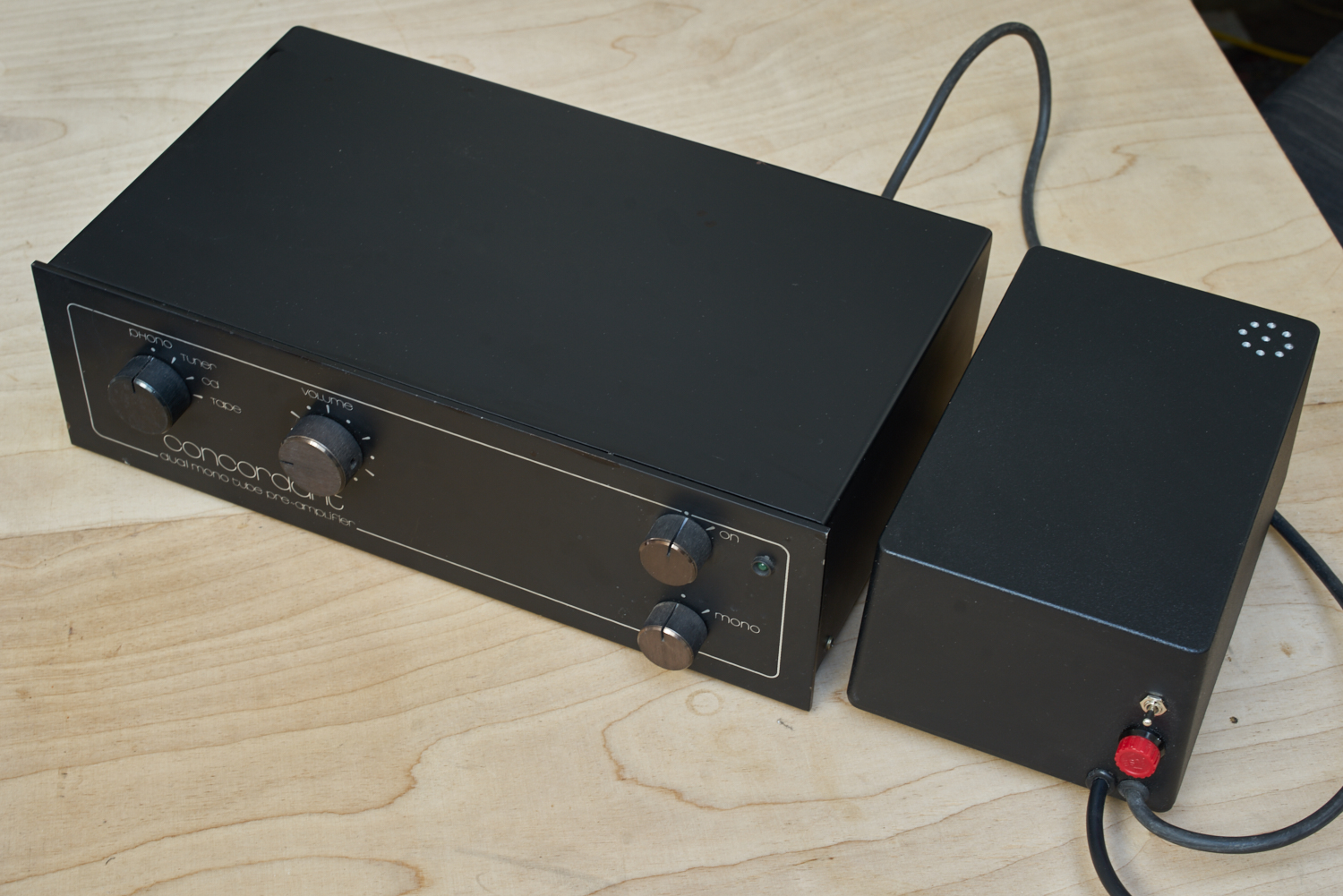
Today I am talking again about building a power supply for a British tube preamplifier with RIAA-equalizer stage. A familiar customer asked me a while ago if I will be able to make him a power supply for his Concordant Exelsior preamplifier. He pretended to have a schematic for it and as well the schematic of the amplifier itself. I said that it would not be to difficult to make one. Next he asked me if I will be able to make one with tube rectification and better components. I said I need to check, because some components are hard to find in the meanwhile and that I would need to check my stock of parts. The schematics turned out to belong to a completely different version of this preamp. As the most people might know mains transformers with split balanced HT-output and two different filament windings "don't grow anymore on trees" as it would be needed for this! A quick look in my storage gave me some overview to pulled transformers from old equipment, foremost from old radios, some were missing parts, others where winded for 4 volts filament, etc. I didn't find the right part to do it well. Next question is to find new parts, Lundahl might here the right solution, but nothing under 200 €, which was expected a lot to expensive. Next problem would be to find a matching case for all, matching in visual terms, but as well big enough to harbor all components. Not easy, but I decided to get forward with a black painted Hammond casted aluminum case of the same height and depths of the Concordant. My customer limited the cost range for all to 250 €, which is an almost impossible sporting competition to stay beyond. A rough calculation showed immediately that such amount will pay the needed parts but not the work making it. On the other hand this guy never had a chance to listen to this preamp before, since he bought it without power supply. This person normally listens to a Shindo Monbrison and other well priced and established products, so he does not know what he will become at the end, just to explain his tight money framing. To be honest with this limit a simple PSU with silicon rectification and simple filter stage for the anode rail and silicon 12 volt IC regulation will be the solution to bring the package back to life within such financial limitations. I told him about and he pleaded to get something better, smoother sounding. I told him, that there will be no guaranty that even a perfect made PSU will bring this preamp to the level he ideally might expect.


Ok, I started some research at the internet and opened the Concordant case with the result that I realized that this version is equipped with ECC82 in the output stage and ECC88 in the RIAA-filter stage. This means with ECC88 it needs a 6.3 volts filament supply – no way make a cheap silicon based regulation with penny parts only ugly rails of hated caps and resistors to drop the voltages. 

So it gets back to the start with tube rectification with EZ81, choke regulated loading and filter stage for the anode supply. I looked again into my storage list for mains transformers, where all transformers are listed, which are useful for power amplifiers with their exact output data. The most of the transformers are collected as pairs, I am always afraid to use one of them for a single project, so still a lot of them is untouched since years. So I found the right type with the right taps, just a little bit oversized for such a project, but otherwise perfect. I decided to use it because I am not getting younger and the future projects might get countable. Now I needed to order a Hammond 157G 30H/40mA smoothing choke and I found a supplier who offered a bunch of NOS double capacitors 2x100uF/400V of ideal physical size to match my selected case. The Concordant sports a luxury, a mirrored double filament support for each channel, so it says at the front plate double mono preamplifier. At the back it has two identical unusual German DIN three pole jacks for this reason. I found in my storage the matching plugs, otherwise nowdays hard to find. So I collected all necessary parts from my storage together, – switch, fuse holder, cables and wires, resistors, tubes, silicon rectifiers, oil caps, supports, screws, nuts, bolts and more. When I first time tested the size of the case with the real components, I realized that it will get tight, – exceptional tight. At the end there was not the space for one more resistor inside. I needed several times to regroup the components inside to make it work!


At the end of the day all parts were in place and the case could be closed without pressure. Before I needed to isolate delicate exposed contacts. For example the tip of the EZ81 just matched the close case because I drilled ventilation wholes into the cover, the middle whole takes the tip, underneath the octal socket I needed isolation, because there was only 1mm air left between HT contacts and the base plate!


When I connected the new preamp with PSU to my setup, I was really astonished. The sound was exceptional refined, with wide open smooth and liquid soundstage, exactly so I do like it a lot. Of course I don't have any comparison to the original version, but I must say this combination is very very good. Yes the PSU uses some basic ideas which have been established in my equipment for years. For example the push-pull choke for the filament, the low oil capacitance in the loading stage for the rectifier tube to make it fast and smooth. 

I am looking forward about the ruling of the owner when he does the compare it with his Shindo Monbrison. It might get difficult... This is definetly under all tube preamps which had a chance to listen to one of the rare singing birds.

And who is now going to pay my work? 

Friday, 21 January 2022

Revisiting own History – The classic Leak TL12+ amplifiers


As already widely shown in my earlier articles I collected in the early 1990ties during my London time a whole lot of classic Leak tube amplifiers. Foremostly I remember one visit in London in 1992 when I did buy an exceptional lot of amplifiers from London dealers. On the way back to Germany my car got stopped from French custom officers because of its obvious visible overweight in its trunk, the rear wheels already were deep hidden in the chassis with an extra 15º camber. I will never forget the officers face when I did show him the tight stacked amplifiers, he had no idea what he was looking at. I don't exactly remember, but it must have been around 6 to 8 pairs of this model TL12+ and several Stereo 20 and as well some pairs TL10.1  and TL12 point one's. I tried to explain that these are historic audio amplifiers, but he hardly could believe my words looking at a wall of golden chassis.


The classic late 1959 Leak TL12+, here already with RCA-socket and input pot.


The shown pair is one set of this batch. I did restore all of them to my highest possible standard these days. In particular this pair got the best care because of the rather rare color "champaign" and with the aim to keep them for my own collection. As regular treatment I replaced the electrolytic filter caps to oil caps. Here the old electrolytic content needed to get emptied in order to reuse their cans for originality and color with new caps glued in. Generally all coupling caps where replaced to oil caps, a expensive step these days because the only modern source for such was Audio Note, who cared about the distribution of Jensens Audio Caps, a good 20£ investment for each value which added alone to 200£ for a set. All carbon composition resistors got exchanged to new German Beyschlag 2 watts carbon composition types, each around 2 € only available in 10er belts these days. The cathode bypass capacitors generally got changed to bipolar tone frequency caps, which mainly where used as crossover parts in speakers. The religion in these days was the use of triodes in all stages, so I always changed the input stage from EF86 pentodes to ECC83 triodes in order to refine the soundstage and to reduce the input amplification factor, which is with all Leaks extremely sensitive. I brought generally the power stages of these push-pull designs to semi triode operation of the EL84 tubes. All these steps were introduced in order to achieve with this little amps a much more sophisticated and smoother operation, in contrast to the impressive, but a bit too cheaky performance of the original version. The reduction of output power from 12 watts to hardly 4 watts in pseudo triode operation emotionally perceived with efficient speakers (better than 96db) as to be a even better drivability. 


Close up of input stage in foreground, in background whole lot of modifications at the filter stage with smoothing choke (at left) and fuse holder, switch (at right) and power cord.


As some might expect the days weren't far that I decided, with almost every Leak model in daily use, the most of them in several versions, to get rid of some doublets to save space and money. Some friends of mine got within this years involved into my passion and became interested as well to use tube amplification in combination with Tannoy speakers. So I sold some amps from my collection to them. As reported in my last entry a Leak Stereo 60 of my early collection revisited me unexpected end of last year. This example found a caring new home in the meanwhile. Shortly before New Years Eve another friend visited me and brought another former pair into service, which acted for 30 years a long term companion to his Tannoy Lancasters with 15'' Monitor Golds for him. When I started to inspect this pair, I realized what 30 years of rough use with several house moves and more or less permanent plugging and unplugging can do. They were completely rocked down. Loose contacts, open wires, leaking capacitors, wax dripping from transformers, tubes run down to 20%, in one an almost black ashed rectifier tube showed the remnants of an unexpected firework, – he had treated them almost to unusable wracks. My friend decided to spend good money for another life and a total revision. At my first restoration in 1992 these amps were already 35 years old, now added on to another 30 years. I will try my best to give them another third life for the next 30 years. Maybe these little wonders will find one day when I already will be passed away the next owner who might bring them into a fourth period of living  –  this is what I will call sustainability – not the highly acclaimed class G digital amps to be so.


View of the complete mainboard, just at top edge underside of pot and the filament symmetry element


For this reason to open up for a new future I decided to change some principles I had 30 years ago. I always took extremely care to keep mechanical originality of the amplifiers, which was meant not to drill wholes or remove unused components, like the octal sockets for chaining further Leak- or other components. Today or even better tomorrow nobody really will use a Troughline tuner or a Varislope preamp, so contemporary preferences for practical use are getting more important instead of originality. A better control of the input signal, in particular with modern high output components (min. 2V or more) like preamplifiers, computers or digital streaming clients, – more or less hum- and hiss free operation and of course still the smooth and dynamic soundstage are relevant for the aficionado.

So I needed to find mechanically and electrically matching filter capacitors as paper-in oil types, not an easy job even with eBay within such sizes. Pots, switches and simple things like fuse holders are more and more difficult to be found in well known high quality, foremost made for military use in the 1970ties.


Knob inlay made from real embossed calf leather matching luxury expectations...


The Leaks got now smoothing chokes (8H/100mA) in the filter stage, NOS mil spec input potentiometers, perfect RCA-sockets, switches, optimized AC-cords and of course a set of best possible NOS tubes in every stage. So equipped this little pair will do a perfect job in the coming years and play now in the same league where best handmade tube amplifiers like Shindo, Thomas Mayer or others are bought for in difference to modern chrome monsters made to match Asian expectations. 


60 years of technological time shift to play music


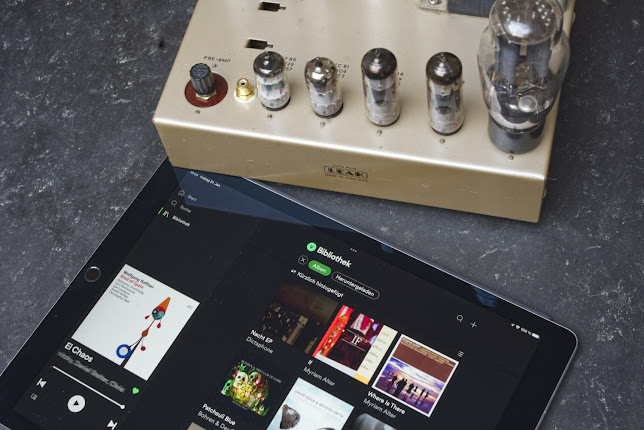
Now this little amps are ready for the time which is already there, a time were music streaming has overtaken the music market and digital components are feeding their playlists into such ultra analog audio chains. After 10 years of wireless music stream into my own chain from my notebook as to be the 'jack of alle trades'. I did spend at the start of 2022 myself an actual iPad with 1Tb storage to be solely my comfortable music juke box to play from cloud services as well from my own digital collection at a finger touch. 

Stay healthy, it might find an end sooner or later, Volker


Thursday, 4 June 2020

Faith, Hope and Salvation – The WE91A SE stereo amplifier without 300b tubes – I did it again

End of 2017 I did publish a post about the single ended amplifier designs and my evaluation of power tubes to be more than an alternative of the Western Electric 300B tube. In these days the idea formed from my earlier sound evaluation experience of different manufactured 300B tubes. The audio business focused on tube amplification made single ended tube amplification designs with 300B power tubes for 40 years to be the "cash cow" of growths. As result there are uncountable amounts of makes and brands in the market which explain each as the most original reproduction derivate of the original Western Electric power triode WE 300A from the 1920ties. The major problem here are the extremely developed market values of original vintage rare WE-tubes from all production decades and as reaction to such rareness the market mechanism highly raised the price tags. So modern production tubes create an own market, such are made in different countries but foremostly in China (to keep the quality level high, lol). As earlier stated, if you are not millionaire, able to light your Cohibas with 100$-notes, the modern replacement tubes in the 100 to 600$ range are all more or less crapfunctional in comparison to vintage tubes from the 1940ties in + 2000$/pc range. So relevant amplifiers of the traditional WE91A design topology use on top the WE310A as driver, the WE274B as rectifier, all together the equivalent for stereo in the 10K$ range and if you really want the exceptional finesse of sound, – alternativeless.

Yet, the single ended amplifier topology shows up to the tube audio connoisseur with several advantages if you incorporate a lightweight, fast and fine detailed alnico magnet driven loudspeaker, like horns and full range paper cone speakers (like Altec 755 or similar) or combinations from both principles. To raise the full potential of such systems the amplifier design is in need of radical control about component quality and about its consequent amplification topology. Today almost all decisive vintage components of quality production have disappeared from the market, so it is almost impossible to realize an amplifier design without any compromising cut or ending up in the cost nirvana (known from several Japanese brands reissuing modern Western Electric equipment at a highest possible level). Such set ups easily might create levels of investment in the million dollar range. If you are not the successor in the Toyota heritage or the son of an Arab prince, it might get a bit difficult to follow up such ways to your hobby within the coming years. For all others it needs some intelligent liberation from hardly traded positions in order to find perfect new ways to comparable sound qualities. Here I am going to describe my second sample to a wishless audio happiness with tube amplified equipment, where the tube line up for stereo matches the amount for a well cared piece of organic breeded beef. Yes, 50 $ and all tubes are vintage NOS highest quality production standards long life types or military grade, – and on sale in good amounts.

I am still in the good position to have several of necessary vintage quality parts as spares stored in my cellar, so I am able to realize rarely a design with almost ideal components. My first sample of such conception from 2017 earned so much interest that I did decide to realize a second version build on an identical design topology but realized with completely different hardware, a interesting step to find out about resulting differences.


Partridge mains transformer beside modern open frame output transformers, all covered by epoxy resin boards, like several British vintage amplifiers show up with


Here I did finalize an early Ebay finding after more than 20 years, a British Goodsell GW12 Williamson PP design from 1949, which had lost its open frame Partridge-output transformer. I did look for years to complete it again or to find a matching partner for stereo use, which never happened by its exclusive rareness. So I decide in 2005 to break off the originality line with a heavy heart, but at least in order to bring it back to a new functional life as a single stereo ended amplifier. In these days I did experiment with another rare find, the DHTs from Elektromekano S6 in order to resemble the classic 300b out put tube in such designs. I used the Mullard EF37A to be the driver tube and tested several output transformers to complete this concept, but nothing could convince my expectations in these days (and the illustre matching preferences of this extreme tube). It ended up that I stored the chassis back in my cellar and followed up other ideas like DHT tubes in preamplification stages and so the Goodsell SE-amplifier got more or less forgotten.

The Danish 1940ties Directly Heated Triodes from Elektromekano, the S6 and M7  (4V/1A) are some of the finest manufactured power triodes made ever. Even the Western Electric types from this period don't match mechanically their standard. Unfortunately these triodes don't match the ordinary range of output transformers but they are still some of the nicest Tube ever.


at the far right the knob for the global feedback loop, realized with single switchable carbon composition resistors


Last autum I did start a collection sale of all my long time collected amplifiers and other audio collectibles in order downsize my life in a "less is more" matter. So I had several people coming to look and listen to different components of my personal estate. Many of such auditions ended into sales of exceptional sounding vintage valve amplifiers and dedicated components like speakers, preamplifiers, tonearms, etc. But the most respect raised after end of a particular sales procedure when the question came up with which amplifier I am going to listen in the future? When I demonstrated the "bastard amp" in my favored chain, the most people didn't need a lot more than a minute of listening to understand my decision. Within the two gone years of time the interest into such a special single ended tube amp has grown. So I thought about another sample, well knowing that the prototype was some sort of recycling of leftovers on a highest level possible. I did exactly know, that I never will get a chance to make a identical copy and so could not predict the following result, in particular when using 70 year old parts like the mains transformer, choke (both Partridge brand) and other sound determining parts like the output transformers. The open frame design of the vintage parts made the selection of output transformers delicate in terms of authenticity of design. Modern potted transformers like Japanese classics from Tango, Tamura or later Taiwan successor   James aestetically do exclude themself for this project. One of my technically ideal choices, the Swedish Lundahls, were no option since their design makes an open frame incorporation impossible. I had a pair of vintage Philips universal single ended transformers in spare (1/2/3/5K:4/8/15Z). I had no idea for which power output they were made for, but size and weight let rate me them to something like 7 watts (similar to Tango U808). The next candidate were some classic Chinese laminated oriented steel core OPTs with 3.5K:4/8/15Z@20W, such have been sold as entry level transformers in HK as Mars brand are built into lots of typical Chinese made chrome monsteramps, which are sold through Ebay since years for small money. With the Philips transformers the amplifier performed with a exceptional open refined soundstage, wide, liquid and natural, but with a little slim sound fundament lacking the typical natural substance of a single ended amplifier. Switching to the 2,5 kg Mars transformers the soundstage was perfectly well balanced. I did only try them since they measured at a scope very linear between 30 and 18000 hz, but these lack all the subtile refinements, which have been already on stage with the smaller Philips iron. So I needed to find something with good sound attitude and matching design preferences.


Clearly visible the eight pieces of amorphous c-core parts forming the final transformer core

Beside these experiments I was a bit curious about all the rumors about different new core materials and designs. The final sow which had been chased through the tube audio village in the last years was the Hitachi made "metglas" core material, an amorphous nanocristalline alloy formed with extremely high pressure under exceptional melting temperatures of several thousand degrees. This high tech material is known for its lowest loss properties addressed with "never before heard" tremendous resulting properties. Something which is equally important addressed to even more important rise of the resulting price tag in the audio world, a factor up to three times to an ordinary cut c-core output transformer. Vintage (early 2000) made Tango or Tamura transformers containing amorphous core instead of c-cores or even laminated iron are on sale at Ebay for tremendous amounts... and even serious brands like Lundahl have incorporated such cores to keep up in the vanishing markets.

Today the amorphous cores are used in different high tech scientific applications or in mobile web technologies and Hitachi produces a whole catalog of differently shaped cores and sizes. It looks that only the audio nuts are paying the elaborated high bill for the next "must have gadget". Hitachi has found paths to produce this high tech metal somewhere in India at reasonable market prices. Like with all other new technology some people will find fast illegal ways to sell fractions of such production lines at the web. Then is it only a little step and a question of short time that you will find other people there who make a serious business with such cores and produce audio output transformers for the audio aficionado and sell these for a fraction of the price of established brands. So I found at Ebay. hk.com different designed tube out put transformers with amorphous core material, one type was matching my primary preferences of 3.5 K/20H/15W, unfortunately with secondary windings interlaced for 4 and 8 ohms. So I asked the seller if a custom version with 15 ohm will be available and the friendly people were happy to make me a customized pair. Visually the transformers are wound in a typical British manner with steel mounting frames, so these OPTs did visually match well with my 70 years old Partridge transformers of the Goodsell. So I ordered a pair with 15 ohm secondary tap in the hope that this transformers will match my expectation set by other brands like standard Lundahls, but will offer a better formal integration with this vintage amplifier. I had no expectation about something special as a result from different core material.

The transformers where delivered by Hermes as a standard parcel, no customs, import procedure – how can this be possible? When I opened the parcel a strong smell of the epoxy resin knocked me out for a second, but this smell evaporated within a day and when I had the pair incorporated into the amplifier, their smell was already neutral. The first listening showed up with a well known sound attitude, so I needed to adjust the feedback loop with the new amplifier. In my first post from 2017 I photographed the amplifier with fixed feedback loop with a 3.2K resistor. Later I integrated two wire wound pots of 5k range to have the opportunity to match different speakers than only my Tannoy Monitor Reds with 15 ohms. Here now I planned from the beginning to have the luxury of a adjustable global feedback loop. After some measurements and finalization by listening I ended up with matching value for this amp, ironically it is again 3.2k!

Underneath oil paper caps ballet and a Partridge choke, all high current wire is original vintage Western Electric wire. Top right corner the switchable feedback resistors connected with blue and yellow wire


The most of yours will or can not believe me, but the new realized single ended amplifier sounds absolutely identical to my first version. Yes of course, the design is to 100% the same, but all the very important HiFi narratives about hardware, the use of parts, in particular output transformers, their quality and branding seemed to be what it is – marketing fairytales. Both amps look completely different, but soundwise I cannot detect the smallest difference, unbelievable but true. I have used the same capacitor layout with the same material preferences, paper-in-oil-capacitors as small values as necessary. For example I use 4µF as loading capacitor and another 4µF as smoothing cap. For 30 years of my life it was impossible for me to get such rail calm, now I know how to do and this amp is dead quiet, like a modern transistor amp, but with a "fresh oiled liquidity" unknown from other tube amplifiers. The only coupling cap between driver and power stage is 0.05µF like it should and not like in 99% of all WE91A copies and derivates wrongly transcripted 0.5µF and so on...

If you are looking for a reasonable priced tube output transformer which shows up with exceptional sound qualities and offers results which are on par with the well established brands for a fraction of the price tag ask the people in HK, they will be happy to serve your needs and HK people need some support anyway, their future doesn't look so bright...


Friday, 16 February 2018

For Lunch in Paris

Hi everybody,

when I was a teenager, we – my friends and I – did regularly after hanging out late at Friday nights, some spontanous road trips to Paris in order to have breakfast in one of the countless street bistros early in the morning. Driving through all the night is something for young people with lots of energy, when getting older such dangerous practice gets lost. But recently my friend Andreas asked me, if I would like to go for a Sunday lunch with him to Paris. This time the manual was not set for breakfast with croissants and cafe, but for a colorful lunch with the best Japanese sushi and sashimi accompanied by some British beef slowly roasted in a typical large scale American barbecue smoker, made in China. Exquisite Japanese Sans (masters) like Kanno, Shishido, Shindo were booked to form a delicate audio menue in conjunction with a Line Magnetic loudspeaker system.


The Defilè


Left: Classic SE PX4 amps with Tamura iron and vintage tubes,  right a typical Shishido SE 808 stereo amp with
Tango transformers and RCA808 triodes, transformer coupled driven by GEC KT66.


Kanno Works SE 300b with input transformer into the
paralleled ECC33 driver tube for improved impedances to couple the
interstage transformer to the grid of the 300b tube.


Nobukazu Shishido's legendary SE 811 positive grid amplifier,
typical for Shishido are the interstage transformers with reversed secondaries
and always realized with silicon rectifier diodes.


In the Premier Arrondissement, in the heart of the town, lives the gourmand Philippe F.. He is a extremely polite and cordial man with good sense and taste for several interrests in life. So it does not wonder to meet a man who has collected a good variety of top class vintage single ended amplifiers from the important period of the 1970 to 1980ties, which can be hardly found outside of Japan. He combines them in his set up with vintage classics from the 1960ties in Europe, like tonearms, pick up cartridges and record players, extended by some today impossible originally to find replica loudspeaker components of Western Electric origin to a majestic audio system. Exceptional in many terms is his Line Magnetic speaker system LM-3, which got highly upgraded with top line products to form some final improvements. The tweeter got exchanged to LM597, presumably the crossover as well to best Line Magnetic standard, and so the Tungar power supply got included to feed all three drivers with three independant lines at once. The bass driver is here now the legendary LM4181.


A pair of familiar Shindo 300b Limited amps, connected to perform. 


We started listening with a Tim de Paravicini preamp and a pair Shindo 300b Limited power amps, equipped with original WE tubes to adapt the whole system and get used to the given room attitudes. After half an hour we switched to the brought Shindo Vosne Romaneè preamp, which was Philippe's major interest to listen to. The standard Ortofon SPU/A got exchanged to the adequat Shindo derivate with a clear destination into refinement. As next step the 300b Limited got exchanged to the pair Kanno 300b amps, which showed up with a very well outbalanced souvereignity. Here now several 300b tubes and as well different rectifier tubes have been in service and showed some typical tonal fine tuning. But as everybody know, such complex systems are mainly defined by their acoustical transducer systems. The loudspeaker in a given room defines more than 60% of the soundstage in a given system. At this point it was quite difficult for me to find decisive opinions about all the changes.


Upgraded complete loudspeaker system LM-3, beside its three-way tungar
power supply for all three units

Readers of my blog learned about several presented systems with Line Magnetic LM22, extended with LM597 tweeter and several different solutions for the low frequency finalisation. I spell out no secret about the fact, that a 22a horn with its dedicated tweeter 597 is a combination, which performs a world class solution on its own. But its exceptional finesse, resolution and transmitted energy makes any adaption of the lower frequency part to a life task. All named sets which have been presented here within the last years, have in common, that all owners permanently try to improve the low frequency support of their horns. The most do incorporate a replica WE7331 dipole enclosure or a downsized derivate of such design principle as by far best type. These are driven by field coil motorized alternatively permanent magnet units of diverse makes and from variable origin and vintage cinema productions. These get powered with one or more amps of different technology (tube-, switched-, transsistor amps) or get powered active to passive, with different crossover types or even with DSP.  To match the horn around 300 hz with more or less wide transitions and different steepness, all these finalisations show how complex it is to find a natural tone. The lighter and faster wideband woofers from Klangfim, the KL405 in different connections, seem to be a passable way for some. This means the low freqeuncy unit needs to be exceptional fast, deep and extended into the middle frequencies with wide overlapping parts between horn and woofer. This problem is the achilles heel of the 22a horn. The bigger wooden horns WE12/13/15 and the metal WE16a perform a lower frequency cut off, so their response shows a different, a bit easier to realize preference for invisible completeness.


One of the best tweeters in audio history the 597 

The here shown frontloaded enclosure from Line Magnetic, which incorporates a 18-inch field coil speaker, is a exceptional solution for all such requests. Upgraded to LM4181 the enclosure can be used as fullrange unit up to 5000 hz, or equipped with different crossover designs to match all named horn types with different take-over frequecies. The LM4181 is like its original predessor from Western Electric, the wide band coned version of three different speakers, which share the same motor armature. The speaker shows elegant wide band attitudes with a unsurpassed fast, refined textured low frequency support down to the deepest levels of bass, without the otherwise dulledness, which is so typical for modern large pa-systems. The enclosure can be opened in the back to form a dipole, which transports together with the front loading horn uncomparable attitudes, which are hardly found in other design principles, like backloaded, vented or bass reflex systems. The combination of frontloading in a dipole is known to be my favorite solution. It is giving large coned systems the property of refined fastness and articulation otherwise rarely noticed. My own speaker showed me once the superiority of such design principle over other more commercially practicable principles.
Now here Philippe's installation shows simply the best connected low frequency range I have listened to in conjunction with the 22A. It is huge and it is high, it is a real piece of space determing furniture, and makes the positioning in the room difficult in both terms, acoustically and visually. This is not the type of furniture which makes life partnerships happy. It takes a good footprint and it needs some back space, as with all dipole systems, its backwarded radiated energy reflects from its backing wall. The system ideally will need some more space than Philippe will actually allow to spend, particular in corners even more, but such better position (a good meter) off the side and backing walls will tremendously increase the soundstage in his room, ideally to a almost invisible holographic soundstage. Another aspect is the door width to get it into the house and the final room.
But soundwise, in terms of a deepest, most refined and fastest organic bass response for musical completeness and integrety, this is a top notch solution of highest expectation to match the world class 22a horn with its invisible tweeter. So far simply the best solution I have listened to and it is straight available by order. No woodwork, no carpenter, no nightmares of finetuning, no lost last hair from endless frequency matching or overboarding bills of frustation killing substitude drugs, like alcohol or expensive food, – maybe only a good glass of wine, while relaxed listening to a record of Nina Simone.


Of course Philippe does not only use original WE-300b tubes from different production lines, he also
needs original Japanese makes from Takatsuki TA-300, here shown next to original WE-274b rectifier tubes,
beside legendary Jørgen Schou MC-step up transformers for the Ortofon SPU


At our way back we made stop at a typical French Hypermarché to get some food for the evening. We bought some exquisite cheese, baguette and were looking for some wine. The range in French supermarkets is phantastic and I needed some time to evaluate some of the offers, when Andreas noticed loudly from two shelves far away: "Look they have all the Shindos here, Latour, Lafon, Vosne-Romaneé, Monbrison, Lafitte, really all!" "Ok, why not staying on with a Vosne-Romaneé for the dinner."

Stay tuned,


Sunday, 24 December 2017

Faith, Hope, Salvation - The Single Ended Tube Amplifier


Hi everybody,

since a long time I didn't post any article about tube based audio with vintage components. To my understanding almost everything substantially was said within the last four years about this topic. But now here I will try to bring right in time a known Christmas fairytale with some new accents.
In particular after my series of articles about the rise and reintroduction of tube amplified audio with a synonymously way to create the Western Electric 300b tube as central element of religous passion over the last 30 years. Yes, a vintage Western Electric 300A or 300B tube is a exceptional unique sounding device with unparalleled attitudes – period. But a lot of other triodes like the 45, the 2A3, the 6BG4, the RE604, the R120, the AD1 and several other directly heated tubes from that period before the 1950ties (i.e. mass production) are as well unique sounding devices, each with a recognizable fingerprint soundwise. Not even to note the big bottles 211, 845 and GM70.

To keep the example of the WE300B, there are more than 10 different vintage original WE types known, which show all the originating imprint Western Electric, made at different production places and in periods from 1928 to 1998. Further are additional license productions, like the well known Cetron or the STC 4300B (Standard Telephone and Cables, GB) versions. Each of this different 300B tubes show a clear and comprehensible sound attitude, different to any other sample of this types. The reasons for such might be today found in aging, storage conditions and of course, even in little production differences and materials. Tubes are made to technical given standards and the most of us know, technical specifications can be evaluated through measurements, but sound cannot. This insight brings us to the question if automatically a more rare and a inevitable more expensive tube is generally the better sounding device?


Three WE300B tubes, one from Cetron

For some, who might fire their barbecue with 100 dollar notes, the permamently rising price tag for vintage WE 300B tubes might be neglible. Dripping every day 10 dollars into the money box is the value of using vintage 1950ties original 300B tubes for some hours every day. The latest Western Electric originated 300B production from the 1980ties generates price tags of 2500 $ for a NOS pair, a used single graved base tube from early production will cost a good 3K$, New Old Stock asks for a open range between 10k and 20K$ for a 70 year old pair. Yes this tubes might do sound exceptional unique, hardly to compare them to any later production line, but do they really sound that much better than later versions,  – or just different? Or does the price tag create a very special cognition, which tricks psychologically our auditive perception? (a common sign of market religion) How long will such investment work, yes 70 years ago such tubes could fulfill the WE specifications of 10000 hours minimum service, but what happened in the meanwhile with such tubes? How do they have been stored for the major past time, nobody can tell you here some reliable truth. Recently I did make a lot of tube testing with NOS tubes from the 1940 to 1950ties production period. Top NOS products from GEC, STC, Mullard/Osram and others have been on test. From every 10 piece batch two tubes failed within shortest running time without recognizable reason. I have never listened to a very early produced WE300B tube, I can remember a shoot out between 1950ties and 1980ties production lines and as a third contender a Cetron type from 1970ties production. This shoot out happened a good decade or longer ago, the oldest tube showed up with the darkest, deepest and widest spread sound attitude (or was it just almost gone?).


Today, if you want to buy a new made tube (new for safety reasons, i.e. religion again, when talking about Chinese tubes, I remember my first bought chinese 300B tube ever pulled out of a box in 1992 failed with a first switching), you can get modern replacements made from China, Russia or from the former East production. This modern tubes do sound substancially different than the most of the vintage original products,  – to say it carefully – the most of them does sound infected with cough or hoarseness, without any elegance and tonal refinement, which is so typical for vintage production tubes. To say it straight, they are absolutely useless, if you you are hunting for a three Michelin star graded audio dinner. In deregulated markets the price tag does not reflect any quality aspect, today its more going to be visa vice. In price ranges between 200$ up to 1000$ for a pair of modern 300B bulbs, you will have today a wide range of choices to get the mechanical value of a ordinary electrical light bulb. It seems to be still a good terminated business, to keep the religion running by serving such tubes to people of the 300b-faith congregation. Captured that only 300B tubes can do the trick, people spend still astonishing amounts into such wearparts, driven by the hope of audio salvation. (typical phenomenia within altered capitalism as religion?).

My long term compaignon power amps, the legendary Leak TL 12.1,
one of the finest push-pull amplifiers in history

Comming back to the essentials of this story, the rise of the 300B tubes was on par with a fresh reconception of the Single Ended Amplifier in the 1980ties. This topology can show some exceptional attitudes and advantages, comparing their merrits with other tube amplifier design principles, like the classic push-pull-designs, known from uncountable variations in the longer past, which are based on D.T. N. Williamsons article in Wireless World 1938, the so called the Williamson Amplifier. All the derivates do use pentodes, tetrodes and their kinkless relatives in order to generate a powerfull output of 12 to 100 watts, with theoretically improved distortion figures. Some of these amps, in particular the very early examples do sound exceptional good. The most of the crowd sounds like what is today known as "tube amplifier sound". Dynamic, a bit cheeky, but mostly impressive. The most readers here know my long time relationship with a better example, the early 1949 Leak TL12.1. These push-pull amplifiers are rediculously overenginered in several aspects and they do sound exceptional transparent and natural, I could not find in 30 years of evaluation something from other manufacturers, which was even close beside. I got once a really early set of Williamson Amplifiers, built in 1950ties from a british radio engineer in Bristol, realized at the best possible level of parts and manufacture. Made with Partridge and Parmeko iron as four chassis design (PSU and amp chassis in double mono), these amps are very close to the Leaks, if not on par. Once I will do a own article just about this incredible realisation as piece of important audio history. Both amps use the KT66 from GEC as power output tube, a tube which was designed around the same time of the Wireless World article. The Kinkless Tetrodes KT66 from GEC are the summit of such pentodes or tetrodes in the 25 watt class. Almost every manufacturer of this time did make a own design, RCA began with the 6L6 as base for all of them in 1936, Mullard/Osram did the EL37 in the late 1940ties, another derivate was the US-designed 807 and 5881. In these days a lot of different applications got as well designed, so that the demand for such tubes was immense. RF-amplifiers, military or civil rf-,  radar-, pa- and tv-stage-amplifiers and finally der growing audio and music business created a huge market for such tubes. In the 1950ties almost every manufacturer in in GB had a luxury power amplifier with KT66 in their portfolio, since US-american makers mostly relieed to 6L6 tubes in these days.


Original bochure from Wireless World about the Williamson Amplifier from 1951

These original tubes are mostly exceptional good sounding tubes when compared with modern reissues, mostly made in Asia. So its is understandable that a new old stock quartet of GEC KT66's today will cost almost 1000$ or even more. Everybody who has compared these tubes with any modern variants, even if they look completely identical, is willing to pay the difference of almost 850$ to get the real addictive drug for his guitar or audio amp. If you own an amp which is able to show all aspects of such refinement in sound quality, like with a magnifying glass, than you know that these tubes can do a unparalleled job for you. This is a alternativeless lessons of truth with push pull amplifiers, but it is even more important with a single ended amplifier topology, where only one single power tube is the decisive key element for its finalized sound. Beside the used iron, which is quite important, but in its role for the realism are transformers highly overated, the power tube is a key component.  If you don't believe about, just have a look to the "legendary" output transformer of the even more legendary Western Electric 91A amplifier, the WE171A transformer, which is a small and lightweight piece of iron. In its days almost any signal was limited to a frequency range of 200 to 5000 hz, in cinemas intelligibility was the major demand, speech frequencies between 500 to 4000 hz was the aim of audio designers. This range is what the "legendary" Western Electric amp shows as its best attitude, such performance is even by todays standards a exceptional result (look at the WE aficionados running wide band horn systems with this sort of amps to match their middle frequency performance).
But today the most of us prefer some high end audio quality, let us point it out, a fast, undisdorted and lean low frequency response from 40 to 100 Hz, or even deeper with powerfull liquid distributed dynamic energy output. The frequency extremes are not the foremost attidude of the legendary vintage amps/i.e. its output  transformer/ i.e. the foremost domain of the 300b tube, it was never intended to be so. The wonderful middle frequency response of such amplification with original 300b tubes, was the point which made this combinations legendary once in the early 1970ties in Japan. They got a synonym for a different realized audio response, which is hardly found in much more technically elaborated products from the second half of the 20th century, not to talk about all the contemporary products, which are just feeding only a remnant  theoretical demand of audio, or let us say it in more straight words – religous belief.        


This article aims to those who have not yet come under wheels in their individual sensual independence and are still able to differnence out on a base of personal auditive ability. Those who want a more natural and less technical sound quality, those who do not want to make some drugdealers fat, those who do not want carry on the misleading message, – for those I have some good news. All others who want to consolidate and follow some tribal paths of gone history, religous correlations or faith congretations with different color codes, from black to grey to green, can stop now reading!


Rebuilt from Cary Audio Push-Pull 300B stereo wrack. The stereo set of NOS tubes from
Cetron, STC and Rogers does cost 50 $, together, not one tube!


In 1994 I did buy a already completely slaughtered 300B push pull amp from the than emerging US-company Cary, which was in these days to my knowledge, the only American manufacturer of single ended amps in the US-market of higher faster further audio. With typical sales arguments of extreme heavyness, glossy shine and solid stainless steel cases this company marketed a range of different 300B amps in the US and as well in Europe, as the one and only salvation for the new tube age in these days. Single Ended mono blocks with one 300B or as Parallel Single Ended versions with two or like this example here, as Push Pull Stereo model. I can remember that these amps were quite expensive, all between 5000 and 15000 $US, which was good money in 1992. So I was a bit astonished to see a eviscerated example for some 50$ at a final outsale of a closing local hifi-shop. This amp was completely emptied, without any wiring or components, but with all original hardware. The shop owner told me that several people tried to convert this amp to a singing bird, but all had given up after a while. The former owners loss was going to be my win. (market religion again) I always had the inherent problems of this amp in my mind and so my idea to bring this thing back to another life, was hold back for years. Alone the investment for four Chinese 300B tubes always suffocated my energy in a glance to start some restauration. It got forgotten in my cellar for more than 20 years til I decided in 2015, maybe to do something with this wrack. First I removed the original output transformers and sold these on Ebay for 400$ back into the US. I stripped it down to the clean chassis and found under the massive casted Cary decal at its front the inscription "6L6-push pull power amplifier". So I realized Cary did manufacture with identical hardware a classic 6L6- and a 300b-push-pull amplifier without change. Now I did understand the amount of tube sockets, the layout was dedicated to a classic design with a half 6SN7 as driver stage, another 6SN7 as phase splitter and two power tubes, all served by a doubled rectifier stage with two 5U4G. With a value of  200uF for the charging capacitor (a lot helps a lot-religion) this amplifier gave me a deep insight into a practice of feeding a new and adolescent market.

In 2016 some friends and I made a final shootout with several 300B tubes (will be reported in another special article once), which showed me again that 300B tubes in audio amplifiers are something for people who don't take care about their money. Maybe the same target group which do barbecue only with the best available hand fed Kobe beef. So nothing for me, I know that the Chianina Beef from Italy is as well a good choice and available for a fraction of the pricetag from Kobe beef. I always trusted in my life into long time established cultural path lines, so I know that in Japan beef got fashionable late in the 1960ties. Before that time beef was almost unknown, because of the lack of pasture, so cows did exist in hand counted amounts mostly in the region around Kobe. (legend building as religion) In the common Japanese kitchen beef didn't play any cultural decisive role. In Tuskany the Chianina Cow has been cultivated for several hundred years with very similar excellent life circumstances for the cows. The right living conditions of the animal and the right treating of the beef is manifested as a several hundred year old tradition which can be read back in the legendary Coquinaria from Martino' Rossi printed in 1465, the first printed cooking book in history. This book was as well a present to the Savoyens, which transcripted that knowledge base for the french cooking revolution 250 years later. I rate Japanese cooking to one of the three best traditions in the world, but to be honest, I never was a friend of the Teriyaki style beef cooking (i.e. cutting beef into bite-sized pieces for the chop stick tradition). The Japenese are better with other things than beef. Have a look at the tv documentation showed once on Arte about the Dashi tradition, unbelievable, than you will know what I mean!

Back to our topic, the single ended amplifier, based on its most famous incarnation, the Western Electric 91A model, is still today a wonderful application as tube amp, but there is no real need to perfom the expensive 300B tubes. A minimalist two step amplifier can show up with a lot of advantages against any other tube amplifier design principle. With other nos tubes such derivate of amp can show all typical attidues on a identical level of audio performance as equipped with 300B's. The most of this attitudes are already common knowledge and have been part of their marketing throughout the last thirty years. Its simplicity is is major win towards refinement, but it doesn't need all the religous writebacks which have been cultivated within this time. Such common fairytales are: 1. direct heated triodes sound better than their indirect heated counterparts, 2. about the exclusive audible excellence of triodes, 3. the second-class rating of multi grid tubes in general as disharmonic element, 4. the over valuation of output transformers for the performance of amplifiers. And finally the witchery as such, 5. the global feedback loop known from conventional designs.

When Maison de L'Audiophile released in 1984 their early interpretation of the original WE 91A amp, their MdL'A300b Legend amplifier with Partridge transformers, showed this reincarnation a very good will to do the best to release a contemporary high graded product of this breed. But it came out with some real faults. Some of these faults relay to time dependend interpretations, like the oversizing of capacitors in the PSU, but some were major faults in the transcription of the original schematic, like a 10 times higher valued coupling capacitor between the two tube stages. Further the far to high valued grid resistor for the 300b tube might be handled by original WE tubes, but several modern chinese copies will be overwhelmed in a glance. About this faults and about the original template Fritz Hunold (frihu.com) has made several excellent articles. If you aftermath such details and if you ever try to built such an amplifier yourself, you will not believe how important such little changes are, they shift the overall perfomance of such an amplifier together with a precisely adjusted feedback loop from mediocre bastard to world class component. Yes, global feedback! (inquisition!)


Rebuilt with James Audio 2.5/3.5/5K output transformer, Chicago Transformer Co. Choke, three General Electric 8uF/600V smoothing paper caps and two stage nos tubes,


Coming back to my Cary wrack, it showed up with a acceptable power transformer with values for the plate voltage of 350-0-350 volts and with respectable capabilty for rectifier and tube filaments and a stainless steel chassis with 8 holes for tube sockets. A good base for the transcription of the WE91A topology into a stereo (uuhh, another sin – stereo, pah) amplifier. I did reject two giant electrolytic filter caps (600uF) which gave me the space for the James output transformers. The former OPT's gave enough space for a solid nos potted smoothing choke (8H/150mA) from Chicago Transformer Co. on the right and a set of three oil caps from GE of 8uF/600V capacity on the left side. Keep the impedances of the PSU as low as possible!
First important decision for such a simple two step amp is a reliable penthode-input-/driver stage. Where once WE did set the WE310A as a working horse, thousands of copyiest had nowdays better knowledge and prefered here a better sounding triode (religion again. wow, what a mistake!). The penthode is a must to get the full possible swing to the grid of the output tube with only one tube, the 300B is very selective character at this point, but output tetrodes can be similiar. Coupling in tube amplifiers is one of the most important things, I was always convinced about the perfect coupling abilities of transformers for the same reason. So it makes sense to get rid of the phase shift tube stage in pp-amps, but here we don't have such and pentodes make transformer coupling impossible. Here a small coupling capacitor of 0.05 or 0.068 uF (original WE design is 0.047uF) is mandatory and helps the pentode to charge this capacitor easier. (I started  with a typical value of 0.22uF,  which is four times higher and the difference is the same like the sliding a boat or a hovercraft. In order to couple both tubes perfectly and to keep the amp dynamic and liquid in its physical sound structure this detail is decisive) Almost any of the competitors or the successors of the WE310A is on par with this rare and expensive tube. A natural partnering substitude from that time will be the British EF37A/36, VR56 or EF6 such show all a metallized glass envelopes, wich is important to get this tubes hum free. The direct competitors of the WE310A are the 6J7G or C6C, but these can only be run humfree in solid metall shields, or otherwise later made smaller metal tubes like RCA 5693, the complete European noval row EF40 to 89 and similar types, like the loktal C3g are possible. The typical penthode as driver is a must, period. A whole range of power output tubes can be set up without electrical change: the kinkless tetrodes from GEC in the first row, the KT66/88, their high frequency derivates TT22 and KT8c, the Mullard/Phillips competitor EL37 with its HF-derivate EL38, the Telefunken F2A11, American 807, 6BH6 and 6L6 tubes, STC 5B254M/A, Russian 5881s and several more tubes will work perfectly auto biased on point with a 3.5 k-ohm output transformer. Exactlthe same point wich is typical for 300B tubes with a different filament and a different socket. All of these named tubes here are soundwise in such topology extremely delicate sounding sources with slightly different attitudes. When connected as triodes they all do sound certain classes superior to any chinese production 300B's, – period. Each of them has a clear sound destinction, so is my long time favourite, the EL37/38 are more at the transparent side with clear destinction to better detail resolution of the higher frequencies and on opposite side are the typical 807's with a more darker tonality spectrum and attention to the bass weight. Decisions should be made to personal taste and with the speaker attidudes in mind. But prices for such nos tubes are still low, so low that it is very easy to test them out yourself with oktal adapters, which are available trough Ebay from a Taiwan seller. The most of the gang are easy available for 10$ for a nos piece, some up to 50$, only the space deers from GEC, the KT66/88's and the German F2A11s are quite expensive for different reasons (demand, superiority and rareness). It just needs a single ended gapped output transformer from solid audio production made with some reserve, let's say a silicon oriented steel lamination wound for 3.5 K, gapped for 70mA to 4/8/16 ohms secondary, with 100mA capacity designed for a output of maximum of 12 to 15 watts. Such are available from different brands like German Reinhöfer for 100 EUR/piece or as top product with c-cores from Lundahl for 250 EUR/piece. There is no need for exorbitant expensive Tango or Tamura iron.
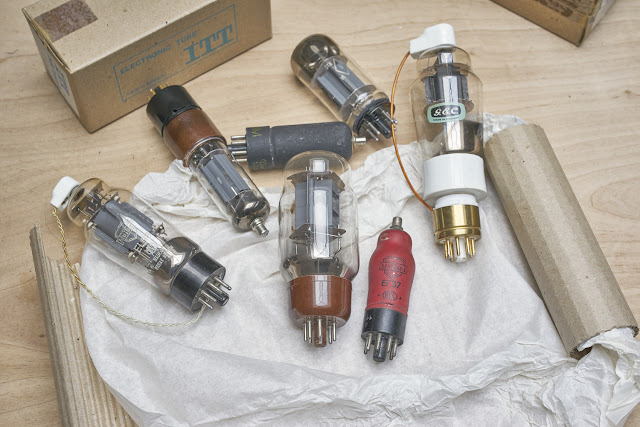
Selection of nos driverstage tubes from Mullard and Rogers. Nos power tubes from Mullard, STC, GEC, Vostok,
with oktal adapters are they all pin compatible, as well have matching working point. (Does somebody remember the tube box?
Yes, the British license STC 4300B was packed identical.  ;-)

If you want to get further into audible perfection, you might profit completely from a diy project against a off the rack production from established brands,  than you should match your finalized amplifier with a so called Boucherot Element at the secondary of the output transformer to your paticular speaker/crossover (again frihu.com). You will not only get a safety element for the output transformer, when a speaker cable fails on power, you will get a superior matched combination. Such a matching is able to shift the sound abilities into a certain level of performance, since the impedance peaks of your speaker get flattenend. You will get rewarded with a extraodinary dynamic, open and naturally refined soundstage, without equal. Such an amplifier will be able to transcript the recorded air between instrumentation in a true natural scale, just like to perform a wide and deep open scaled dynamic soundstage, an aspect I always prefer beside tonality as my major criteria for aural excellence. Such an amplifier acts so sophistcated, that I couldn't imagine the result before I started this project, otherwise I argue with myself now why I would have done it some 20 years earlier, but I would't been able to do so back than. Such impedance matching makes as well complex loads possible, like a typical vintage 15 inch coned voice coil in the 12 ohm dc – 3mH section. You will be rewarded with a well matched partner with 6 watts output power, able to drive your vintage immobilias from Altec, Tannoy, EV or Klipsch.
By far the most of commercially available single ended amplifiers cannot outperform the classic push pull designs in this discipline of speaker control. Such always have been named to be short of power reserve to do that job well, which have given them a general poor reputation. The floods of copy and paste chinaware within the last one and half decades for peanut prices and glossy cases, have ruined the credibility of the single ended amplifier topology to a final stage. But it is more than worth to give it another try.


For some it might look chaotic, others know direct solldering to the tube socket is the best sounding variant, highly improved to any series production board or printed circiuts. Here the decisive coupling capacitor from nos Bosch production, some carbon composition resistor and Rosenthal non inductive ceramic wire wounds.

In Sound Practice Issue 14 Herb Reichert stated in an article about a completely transformer/choke coupled push-pull amplifier, the so called "Feral Eye": "This amp, ... has what I call a lubricated clipping characteristic. It has a sort of James Bond like poise ... The Feral Eye plays music very differently than most of us are likely to have heard before. It sounds more full, whole and complete than any traditional PP amp I have experienced. " Since I have finished my single ended amp I can state a similar experience here, a lubricated fluidibility, which I have never experienced before in such a scale. I am absolutely convinced about the fact that the reason for such attidude, just can be found in the improved coupling of only two tubes. Such a majestic attidude is hardly found in other amplifiers, this rare effect, it is prominently credited to transformer coupling. I can state that this particular bahavior for me justified within all my built preamplfiers, the employment of output transformers and plate chokes as to be higly superior for that reason to any other solution. It is a interesting fact, that now here the same advantages popped up with a precisely optimized conventional topology. 


Low impedance filter section with huge paper capacitors and and smoothing choke – a must. Solid wire as well.

But I have to regret, when I started to finish my Cary wrack after years of convinced ignorance (again religion), I didn't expect anything special.  I had no need to change my always winning team for something different. Recently my mood grow to realize it, it was laying around for so long: "You have bought some output transformers some 15 years ago, now just do it. If it fails your claims, it will be sold in the bay next year.
I never anticipated such an outstanding amplifier, which has already set my long time favourites, the Leak TL12.1 into retirement, and this happened with every respect and so well deserved.
If we weren't already a dying group of white old men with strong established attitudes and a lot too much possessions, I would go as far and try to realize in a small edition a series of amps, based on this experience with Taiwanese copied WE91A chassis/housings/cases, with tetrode tubes and Lundahl iron inside. An amplifier for those who need to find the final thing for a final chillout on an island, – but this idea looks like another Christmas fairytale in the wrong religion group.

For everybody a well shaked coming year 2018 with lots of wishes becoming true


P.S.: "Tamensi movetur!", Galileo Galilei, Pisa, 22.6.1633