Sunday, 25 January 2015

The Legacy of Tube Preamplifier Designs – The Driving Output Stage III

Hello to everybody interested to read on,

today I want to report about my unexpected experiences which I made through my evaluations with inductive coupled stages within preamplifiers. As I said at the beginning of these series of articles, the red based RCA tubes have alway played in my tube amplified life a exceptional role of superiority. I came across to them by an article in Sound Practice Magazine in the early 1990ties. Shortly after that event I did find a handful used red tubes at a hamfest in these days in Germany.
The RCA Red Based Tubes 5690, 5691, 5692, 5693 are a set of specially made octal tubes as highly  mechanically rugged design variants (three mica spacers, three ss supports, strengthened and volume reduced glass envelope) of the common 5AR4, 6SL7GT, 6SN7GT and  6J7GT tubes made by several brands. From my experience these tubes are by far the inferior best sounding indirect heated small signal tubes made ever. The high mu triodes 5691 and the medium mu variant 5692 have been incorporated into my phono and line stages since I have used them the first time. They impressed me from the beginning with exceptional audible superiority and I never found something close to them. Their built quality and their exclusive metal materials are chosen without any restriction to form the perfect operating devices for the us cruise missiles with a shock resistance preference of 500 g and long life service of 10000 hours. I know in theory there are a lot of other tubes matching these specifications written down to paper, but in real I never found other tubes able to compete in all aspects of comparable applications as audio tubes, by far.

A equivalent to the white Alba truffles with tubes are the red RCA's: Here the RCA 5691 und 5692 with typical black plates and extra strong ss-columns and triple mica spacers with typical red octal sockets made and stamped by RCA. The same tubes are sold by GE, other brands made them with brown base and different mechanical design.


Within this evaluation I did use several indirect heated tubes with perfect theoretical preferences for the planned implantation as output tube with transformer coupling. I did test the famous and once exceptional expensive german government tube for telephony, the C3g, a highly praised contender strapped down to triode use it will show up with theoretical perfect internal resistance for transformer coupling. But in practice with Lundahl LL660/18mA it could not convince me with a above average performance. May be a problem that it is a penthode and not a real triode, but it could not follow on the better real triodes.  Further I did use the 6SN7GT/5692 as single system (8.5 K) with choke load, as I did test them with their loctal variant 7N7 in parallel with OPT and in single implementation with choke. Both designs are as well tested with 5687 and with ECL85, tested as two step amplifier with the pentode system strapped as triode with 3.5-4 k as partner for the output transformer coupling. I did listen for a couple of days to each set up before I changed the design for the next value of tubes. The C3g showed up with the worst performance, maybe a result as being not real triode, together with the 7N7, which showed the typical spills known from several brands of 6SN7 tubes.


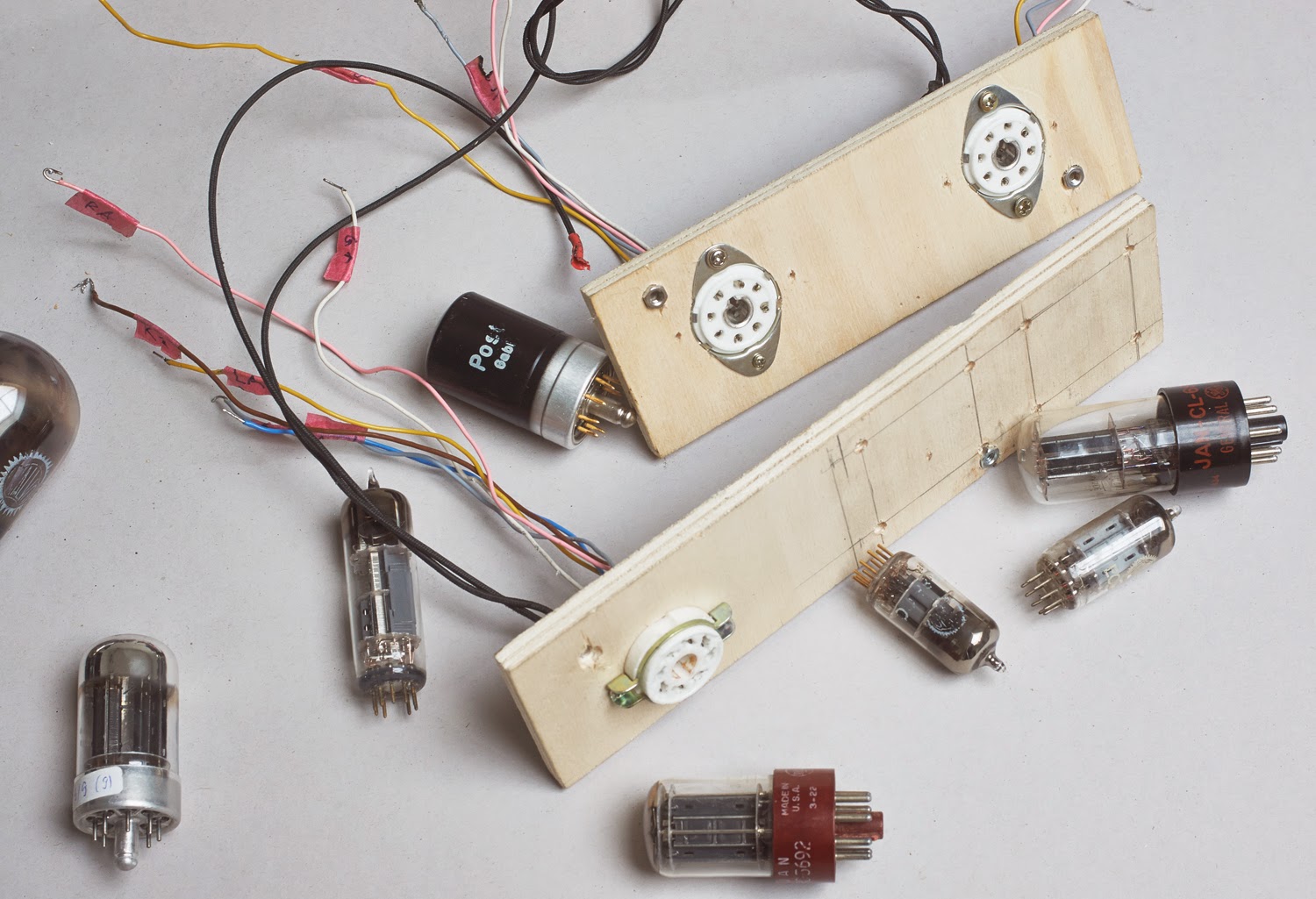
My evaluation enclosure to test different set ups. here seen with Lundal Ll1667 plate chokes and german post sockets serving as stand up contacts for the adapter boards mounted on the top cover. 


It ended completely (if it ever will end once) different than expected and it is a good sign of such open ended research. I made a complete new bundle of experiences (thank you Sakuma San and again Ken Shindo), which are a lot more detailed, contradictory and expressive than I expected before. I am almost unable to describe here the complete evaluation process and its results. These comparisons brought me a complete new lesson about the role of impedances between tube stages and their effect to audible frequencies. Their physical hand over improves when low enough, comparable with a supported sort transport of natural energies and resolving finest textures of harmonics. Just pure ease.

The Ease of Listening


In general it can be said (again) that inductive loads bring a general refinement and linearity into each tubes performance, which is a tremendous advancement comparing it with classical rc-coupling designs. In 99% of commercially made tube preamplifier stages tubes are rc-coupled or show up with with SRPP designs, inductive coupling seems to be to expensive for profitable ventures. Almost 99% of all small signal tubes have a higher internal impedance than 4k, which means without transformer it is impossible to get it under the 1k output impedance line, this means all here described benefits will not be available within the most of all tube amplifiers. Tubes with high current heaters systems (RCA Reds pl: 600mA/20mA, 5687: 900mA/18mA) and relatively high internal current are better sounding than their lc counterparts.
The aimed low output impedance of less than 1 k acts as a perfect server for the dynamic and energetic attributes of the audio signal without destroying the tender micro informations and keep the harmonic structure in a natural balance. Both achievements reassemble a tonal and dynamic completeness of a audio performance as sort of ease, which hardly can be obtained with other design issues.

Any of the named tubes matches more or less in a almost perfect way the preferences for such implementation with a Lundahl LL1660 output transformer. Alternatively all these tubes have been used with a plate load choke LL1667 coupled with a pio capacitor. Both choke and OPT have been used with different air gaps to provide optimal induction before saturation (I used them in variants between 5mA to 20mA).

My evaluation enclosure with adapter board for two octal tubes, here shown with two RCA 5692 in parallel mode and choke load.


The by far best combination till now (actually only indirectly heated small signal tubes have been compared) are the choke loaded paralleled 5692's in pure class a mode. It was a instructive lesson when I did parallel the internal systems, because I did use each side of the tubes for separate channels before with OPT. Originally each half of the tube will show up with 8 k Ri, a bit to high for transformer coupling. To get it made I did parallel the internal systems in order to half the resistance and to match the transformers preferences ideally. But again with LL1660/20mA I was not really impressed comparing the audible performance with the single half tube version in choke mode. In choke mode the tube seem to have a much better linear performance and improved coherent tonal harmony. Before I did use the 5687 with 4 k Ri at the OPT with a quite good results (as described in my last article), this gave me the push to try the 5692 in parallel in a almost identical set up as well. The 5692 were different, but still some sort of limited, a bit repressed, not the pure wide open natural performance I was looking for. So I did use this design with chokes. It took my breath away how much the soundstage improved. It did not even remind me a little to the OPT version and improved against the single half tube in a way I did not expect. Here now it was a perfect example to show how right low impedances are supporting audio frequencies and its physical character of delivery.

Everybody knows this effect from coupling speakers to a power amp. If the preferences of speakers are ideally matched by the driving ability of a power amp, the sound starts to shine with dynamic completeness and with liquid naturalness. This process is often compared with the physical parameters of a car, were the weight and its power are arguments, but can have different formations with two or eight cylinder engines, either with small or big cubic capacity. A perfect match of amp speaker/combination shows up with exceptional driveability, comparing it with the high torque of a big high power pump loaded diesel engine…

As well other tube stages will show the same importance of their deliver ability to prevent any losses of finest energy, liquidity and tonal structures to hand over from a source. In terms of a audio chain there are several transfer stations, were signals can loose a tremendous part of their completeness through wrong coupled impedances. It starts with the cartridge, as moving coil it might have to match the first stage, a step up transformer (a quite well known critical match were you can loose almost 70% of the cartridges signal), as next the step up transformer needs to match the grid of the voltage amplifier of the first stage of the RIAA-equalizer. If the the phono stage is a stand alone unit, its output stage will be the next critical point. Otherwise the commonly highly underrated line stage is the next critical step. For the most people the line stage is less important, because it does not make any high amplification, it's role is just to balance different levels of sources and to bring their output impedances to a lowest possible level, that the following amplifier can take the signal without any loss. (From my todays point of view with this new experiences this are nice little words for a exceptional important function).


My RIAA-equalizer with two 5691 in the voltage amplification stage and two 5692 choke loaded (Lundahl LL1667/20mA) under (stainless cover) for the output stage.


After the experience with the paralleled choke loaded 5692 and its superior drivability I did introduce this design into my RIAA-equalizer as output stage. As well here the coupling improved in a exceptional unforeseen way the audible informations. Together with my line stage it forms a train of musical informations realized never before. Both output stages are now high current low impedance mode in pure class a. Exceptional refinements without any hardening or compression effects, carried with a dynamic performance of pure liquidity and natural finesse. A completely new impression about ease of listenability. This system will be back upped for further evaluation.


As preview to one of the next articles about preamps and direct heated tubes I show here a rare delicacy, the Philips made TS20 eqv. of the STC4021A or the WE104D. A ideal low (1.8K) impedance triode from the 1930's from the telephone era shown with typical Johnson 210 bayonet sockets (like 300B).


In the next article I will try to find arguments for the use of the parafeed coupling. I am awaiting a well combination of benefits from choke loaded designs combined with even lower impedance figures, we will see.
Read on soon if interested, Volker

Friday, 16 January 2015

The Legacy of Tube Preamplifier Designs – The Driving Output Stage II

Hello to everybody for the first entry in 2015!

I ended my last entry about the output stage of tube preamplifiers with the words: "the role of the tube is highly overrated". In a way it is and in some other ways it is not. In terms known from classic tube preamplifiers where "tube rolling" is often practiced method for filter like compensations in order to equalize typical sonic errors which are quite normal in tube audio sets from mixed brands. If a tube ideally matches the preferences of a output transformer, the two parts are melting together to be seen as one functional unit and the typical effects from different tube makes are getting quite negligible.

But before I try to refer about the benefits and disadvantages of output transformers in a preamplifiers, it might make sense to describe the general technical advantages of such inductive coupling. Again, it can't be said with enough emphasis, the preamplifier is sound wise one of the most important electronic devices in a elaborated audio chain. In early small signal stages, even more with high gain phono stages, the preamp has a tremendous impact to the attitudes of the finalized sound stage of a complete system. In real life almost everybody takes a lot more care about power amplifiers and loudspeakers as to be the most decisive components for the sound, a common and well established position in the world of hifi since generations.
In history manufacturers have long time given preamplifiers a underrated position, just a functional necessity to equalize different sources, that was it. Almost every well named manufacturer in the golden age of audio did power their units from dedicated power amps. I do not know one example in history till the 1970s years that a preamp has got equipped with a complex power supply, i.e. with regulation. In these days cheap transistor regulators got introduced for voltage regulation and stabilization, since the benefits of tube rectification already had got completely forgotten. Back in these days the transistor has been seen as a universal remedy to any sort of disease and it was cheap. A inductive iron choke or even  better two have been hardly found in any commercial audio component designed in the western world after 1950, even in preamplifiers breaking the 15k $ pricing line like AR, CJ or MFA in the 1980s. But instead each tube got regulated alone by one own transistor in order to distinguish the last touch of typical tube life...
Within expensive government amplifiers custom made to order at that time period you can still observe all the goodies for perfect signal shaping, – chokes, tube rectification, stabilization and regulation. As in Japan inductive couplers in combination with tubes have always been involved more or less as standard solution from the beginning of the rediscovery of tubes for audio amplification around 1970.

Western Electric amplifier, all stages are transformer coupled

Today we have learned to use transformers and chokes again as indispensable parts within tube amplified devices, a development which is given way by the communication throughout the web. Their influence is a improved linear performance of tubes, i.e. their refinement of micro dynamic detail, their ability to open up for holographic performance, their positive effect to keep the music in a natural flow with unsurpassed sonic completeness and as well their ability of involvement, – all these attributes culminate in the small signal stages of a preamplifiers as to be seen as little sound machines.

Within this low impedance any sort of resistive loads like from different cables or their different length is a negligible factor. Without such low Z standardization, like common in the tube equipped hifi world, it is impossible to drive coming tubes stages without loss or it will come to very common difficulties between connecting impedances and as result inadequate dynamic losses. In particular with tube amplified audio components this topic is a major issue for the "never ending process of device exchange mania" in the audio world. It is as well a welcomed perfect instrument to keep the market in a permanent flow of search …?

One instrument to keep the losses as low as possible is a defined low output impedance within each amplifying stage. Almost my complete life with audio components it was said that transformer coupling within tube amplified components is a necessary must, but will show up with several inherent restrictions and limitations. The loss of bandwidth and typical adding effects like the increase of dynamics from bridging transformers (input - output: input - output: etc.) are the most well known limitations named. The arguments did sound logical to my understanding, if every unit will add two coupling transformers at the input and output stage into a chain of several components, it cannot be better like without them. It has to be seen that the omission makes additional components necessary, like dc blocking coupling capacitors. These are soundwise some of the most shaping parts within a amplifier design. As well resistors for the dedicated anode load of the tube will bring obvious effects into the soundstage like roughness and phase shifts. Simple RC-coupled circuits (anode or cathode followers) are much simpler design solutions with almost no extra costs comparing the result seen from a technical point of view, where the transformers is the most expensive part.

Within the rediscovery of tube amplifiers within audio in the late 1970ties and 1980ties, transformer coupling within small signal stages was almost forgotten and was seen as a expensive and as aged historical defeated solution in the western world in these years. Instead US american designers did work hardly to introduce new silicon devices to regulate each tube separately as brave hearts new invention. As in Europe, the british, french and german designers preferred simplest traditional rc-coupled designs from the RCA handbooks to skim the cream of profit from the new growing interest at tubes in the audio markets. So the advanced transformer coupling was reintroduced mainly in Japan in preamplifiers. In Japan inductive phono equalization was seen as superior already in the 1970ties years, a topology which make lowest possible impedancies a must. So such 15K:600Z preamplifier transformers haven been produced by all well known transformer brands (Tango, Tamura, Hashimoto) and have been widely used in advanced designs from that time on.


The implementation

As already described a perfect internal resistance of the driving tube is essential for the best possible transformer matching. Values of 3 to 4 K are good, lower values are even better.  If you match a given tube to a output transformer it can be helpful to charge the secondary for improved frequency response. Transformers like the Lundahl LL1660 with a 4.5:1 ratio don't have a specific primary impedance, their primary is a reflection of the charge at the secondary from the following stage. With a resistor parallel to the secondary winding the output impedance will change the primary as its transmission. Together with a capacitor some unwanted peaks in the frequency response of the amplifying stage can be adjusted for perfect flatness.
Another main important question is the inductance of the primary winding of such a transformer. It is the important value for the low frequency extension of a tube. As you can see in the table, a low internal resistance is very helpful for a good match of low frequency response (there can be seen loads over 5 kilo ohms bring several problems into the design), were the transformer itself is the limiting factor. A air gapped transformer like the Lundahl is set for maximum dc in its primary winding within its necessary air gap. A Lundahl LL1660/18mA is set for 18 mA dc in primary and within this configuration at 100 henry inductance before the core saturation will limit its performance.
Now with such preferences we have already three values in mind, a maximum internal tube resistance for 100 H is around 3 kilo ohms with a maximum current of 18mA limit. A internal resistance of 3000 ohm divided through the transmission of the transformer will give the wanted output impedance.

From the RCA handbook
Now we do look for tubes with a internal resistance of almost 3 kilo ohms and a average current of 18mA at a class a working point. Paralleled 12AY7/ECC82/6SN7 are true candidates and have been historically used in such designs. But there are other and less known tubes like the 6S4, 6386, 5687. A very clever alternative are the multiple system tubes like ECL84/86 etc., they combine a complete amplifier system with perfect output parameters in one glass envelope. And there are the hard to get ancient direct heated triodes, like 3A/110B and WE equivalents WE101, the french, dutch and german post tubes, all with 4 kilo ohms internal resistance are promising candidates for the extra delicate soundstage only direct heated tungsten cathode filament tube are known for.

I made some tests with 6SN7GT/5692 and with 5687, the latter is for me a new tube in the field of experience, since I did always rely on the famous RCA red base types for decades. The 5687 is a typical space age tube developed for computers in 1950 but mainly used in military and industrial applications of the 1970ties.
One tube, two transformers, two resistors, two capacitors together with a stepped attenuator form a perfect line stage able to drive any tube amplifiers input stage. Working in pure class at 18mA current this tube (I had several different brands like Sylvania, Raytheon and RCA in test) sings with exceptional natural fluidity, micro detail and perfect dynamic attributes.  Homogenity, perfect phasing, a unknown depths and wide open soundstage show up with a balanced dynamic performance. All results are benefits from the inductive load of the tube instead resistive loads with more common designs. In theory it is said that the tube works more linear at a inductive load. The transformer if perfectly implemented, brings several benefits into the performance, which is a sort of sonic complete- and naturalness with refinements unknown from RC-coupled or SRPP designs.


Typical japanese designed preamplifier interior with transformer coupled tube stages and inductive RIAA equalisation, stepped attenuattor and massive pio capacitor use, here a design made by P+C company, Japan.

Only a few designers do have understand the lessons of history about the general improvements of transformer coupling and its alternative less improvements for the soundstage. Like Sakuma who did couple almost any tube at any stage with transformers in all his life, for him it seems to be a mandatory question. He brought this idea to a further point since he did built always the complete amplifying chain into one case, from cartridge step up transformer to the speaker out put transformer within three or four stages all coupled with interstage transformers. To the common theory such a system with five to six transformers in one chain will perform with a hardly limited bandwidth of a bakelite telephone, but in reality it seems to be very different?

Sakuma intergrated amplifier design from MC-input to speaker output in one monophonic designed chassis with some transformers on top.


As well Ken Shindo did always implement transformer coupling into his more elaborated amplifiers, since 15 years he did install them even into his simpler designs, a sign of indispensability? Or Kondo who did use widely a combination of SRPP (here one tube regulates the other, it can be seen as one tube acting as electronic choke) topology and the benefits of transformer coupling in mixed exchange within his high priced complex units. In general you will find in Japan loads of diy kits and custom built preamplifiers from the past 40 years were coupling output transformers are a indispensable standard. As already named the inductive equalized phono stage (LCR) is it a preferred topology since 40 years as the final word for RIAA deemphasis. Originally designed for the use with professional NBA (japanese broadcast) components, this topology got very famous and is highly preferred by japanese enthusiasts, even if the implementation of such unit without complications seems to be impossible. Here a low z output behind the gain stage it is a must to couple the inductive equalizing filters in between. A 600 Z transformer output is the only possible way to see the red sun again, but this topic will be discussed at its own in some future time.

Read on soon about alternative ways of inductive transformer coupling for output stages, like the parafeed or choke loaded design topology, Volker


Tuesday, 30 December 2014

The Legacy of Tube Preamplifier Designs – The Driving Output Stage I

Hello to everybody,

a last posting for this year is made with the intention to bring credit to the leavings of important figures which did die within the year, in the early beginning Ken Shindo and in autum Jean Constant Verdier. Ken Shindo is one of the few in the western hemisphere known japanese designers who did design a wide range of exceptional balanced and elaborated sounding tube amplifiers. As the most people might know, in Japan the evaluation of historic western tube equipment was paragon. They started to inspect, research. refine and outperform the classic examples made for the early professional broadcast or cinematographic use like WE. RCA, Altec, Klangfilm and others, while the western world got flooded with their cheap commercial electronic mass products from Pioneer, Sansui and others in the 1970ties years for home entertainment. Their particular asian appropriation of mastership thinking, their diligence and finally their conscientiousness made at the other end unique products possible, which collect more experiences in that field of expertise and are far ahead of other made product in the world of tube audio.

This article will be some sort of summery to my evaluations which I made within the last weeks in order find out about some basic influences of particular design topologies important with tube amplified output stages. It came into close inspection by a typical side accident which happened in November. I had a chance to listen to a original Kaneda preamplifier in a very elaborated audio chain, where a Line Magnetic LM22A/555W/597 horn system was driven by a Shindo power amplifier and a Monbrison preamplifier. It happened that we were talking about Kaneda preamps and it came to the point that I instantly got offered the chance to listen to a sample. Me was told that the (japanese) transistors inside normally love a long warmup time, – in every day use they never will be switched off… The Kaneda preamplifiers got popular in Europe through Jean Hiraga and the parisian Maison de L'Audiophile in the late 1970ties and early 1980ties, who brought this design topology from Japan. In these days the preamps got mostly sold as kits and have been highly praised as perfect alternatives to high priced tube amps mainly coming from the US in these days.

In order to get the Kaneda warmed up to best performance, we did wait for some hour before we switched over from the Monbrison. As we did before we did listen to digital streamed music material. This means we did listen to a fraction of both amplifiers, so only the output stage (line) and the power supply from each unit have been involved. During the warming up we did listen to the Shindo with a variety of program material, before we switched to the Kaneda unit.
To be honest, I would not have believed before what happened. The difference between both units was tremendous wide, more than that. Coming from the Shindo, the music was natural in a flow with all dynamic attributes right in place and loads of micro dynamic information (commonly named as air). With the Kaneda the music flow was stiff, almost grey and grainy, without any particular micro dynamic detail. It might be have been the temperature of the Kaneda, but even with a imaginable top condition it would not be assumable to difference out to a natural completeness shown by Shindos Monbrison. I was staggering and noticed that only one tube with its PSU was able to outperform and boost the Class A battery supplied Kaneda into a different world. Again a perfect example that Shindo did better than perfect know what he realizes. And in difference to the most other tube amplifier designers, he knows exactly how it has sound finally. His superiority was not alone the knowledge and experience with parts, components and topologies, it was mainly his aim to get the right decisions into order for a precisely aimed audible result, always having a perfect dynamic natural performance in mind.

After that unforeseen demonstration of superiority I went home deeply impressed how well Shindo implemented his output stage in his design. The most here reading, do know that I am into the merits of directly heated triodes in small signal stages since a decade. My long term approved preamplifier uses the Aa Weitverkehrsröhren, a design with some little restrictions (high output impedance) but so far best audible general performance I have used. I have been at a point were I did not want to question this design again. But this experience did do. It pointed out to the most questionable part, the output impedance of the driving line amp is tremendous important part of the complete sonic result. OK, thank you Ken Shindo for your advice, I will take another lecture as homework about this topic.

A typical professional US broadcast preamplifier as made by several companies like IPC, RCA, Pultec or similar with high mu input  stage 12AX7/ECC83 and paralleled 12AU7/ECC82 transformer coupled output stage in order to archive low impedance output (600 ohm or lower).


First of all I did work out theoretically all possible tubes which might be superior within such a design (output transformer with 600 Z secondary). For the beginning I did look up what will be available from my shelves, – what will be necessary to get. I had several output transformers for that reason lying around (different types of Lundahl LL1660, LL1680, its original UTC LS27 and a pair of Tango permalloy core 20K:10K/600) and for practical reasons I started with tubes I already own. The most output transformers are limited at 10K to 20K primary impedance when set to a realistic 600 Z output with reasonable DC in primary (5-20mA). A rule of thumb says that you need to calculate three to five times the internal resistance of the tube to find the best working value of the output transformer (example a 3K Ri of a given tube will match a 12K transformer primary side). A variant of design is to incorporate a additional anode choke (getting the OPT transformer off dc in its primary, but reintroduces a coupling capacitor). For that variants I will have a selection of Lundahl LL1667 air gapped chokes for 5 to 25 mA DC by hand.


Other than a producer of commercial amounts of units I can set my interest to the best components available, I don't have to take questions of availability or single prices into account when I decide. All my tube amplified life I was a great fanatic of the RCA red base series of tubes (5691/6SL7GT, 5692/6SN/GT, 5693/6SJ7GT) which were originally made for the cruise missile control units and are extremely mechanically rugged versions with double heater consumption of the standard octal versions (600mA does not make them a universal replacement). Even their prices have always been literally skyrocketed and so you rarely will see any commercial made audio amp designed with them (Bruce Moores Luminiscence), but I believe they are some of the very best made tubes ever. In all these years these tubes have outperformed everything similar in all my preamplifiers, 12AY7, ECC82 or 802s, Telefunken, Mullard, – everything!
Here now the 5692 with internal impedance of 8K is a candidate for paralleling their two units to half their internal impedance. As well a true legend from the German Post, the C3g with 3K ripple in triode mode is a ideal contender for such implementation. Western Electrics 417A with 1.6K might be a true choice as some other space age tubes like 5687, 6463, 6386 have to be taken into account. But as well real power output tubes like 6F6G, EL84 and similar types will do the job. All named tubes are indirectly heated types, but there are a few DHTs as well which might outperform the late high-tech stuff? The Ce/Cas Weitverkehrsröhren with 4K ripple, the british pedants 3A/110-B and 3A/101-B and of course the Western Electric tennis ball battery tubes are matching perfectly, but you need to find them since they are exceptional rare. As there are little better known small power triodes like 801A, 2A3, etc., but they make output transformers necessary with higher DC capability in the primary winding or the use of the parafeed design together with a choke load.


To make such a comparison meaningful I know that the power supply might take an important part at the final result. So I arranged three different interchangeable power supplies within each setup.

First my standard PSU with AZ12 (mesh plates), all oil paper capacitors and several chokes in the HV rail and a selenium rectified LV supply with chokes is a complex and huge unit. All Transformers are hermetically sealed oil filled types. The anode supply is regulated and stabilized with two tubes as three active units.
Second a industrial type PSU with Selenium HV rectifier and highly regulated and stabilized with four tubes and AC low voltage supply is a alternative solution.
Third a standard supply without regulation and stabilization, just choke and capacitor filtered. LV selenium rectified and RC-filter rail is another option.

With all supplies I have the chance to adjust the anode supply widely, so that any tube from my range can be optimized with anode voltages between 150 to 230 volts. So I started to install identical connection plugs to each unit, which gives a flying change during evaluation a chance.

The results of my comparisons are nothing less than remarkable and expressive, they gave me a deep insight into the effects, requirements and influences of each topology. The optimal working point of the tube itself, the adaption and matching of the output transformer, the influence of different generated anode voltages and as well different filament supplies. And finally the tube itself and its character in the final soundstage. As little shortcut to the end it can be said, the tube itself has a highly overrated position to the final result.

Read on soon, Volker


Sunday, 14 December 2014

Natural vs. Analogue vs. Digital vs. Fraunhofer Algorithm processed Music IV

Hello to everybody at the christmas holidays,

I will try now to finalize my series of articles about different recording and storage methods of audio information. So far I have tried to describe the holy religious believe into the audible improved qualities of analog mediums like vinyl records or reel tape. As well I did start to describe my experiences with digital stored information and tried as well to difference out a variety of different sampling and word length formats. I did try to describe arguments of availability for different stored formats, the massive influence of hardware to the performance and their comfort of use. Today I want to find final arguments about these topics, since some sort of serious discussion will not start throughout this blog, even when I did try find provocative thesis's and arguments for one or another strategy.


As I did describe before, I have a huge collection of vintage vinyl. I did concentrate my collecting to first releases of recordings in the fields of Jazz, Blues and some classical chamber music. I did collect with a general interest into a diverse range of interprets in different fields of practice. Just to give some examples, I did collect saxophone performed music and did try to complete the original recordings (only EP and LP) from the most well known musicians of this genre. So I got a range from Coleman Hawkins to Archie Shepp, from 1948 to today with 30 and more records of lets say the 20 best saxophone players of all time each. Next to a whole lot of dedicated jazz music as well with female voices, I did collect music with Cello as main instrumentation. (No wonder cello, sax and human voices cover the same tonal range) So I got the Pablo Casals work complete and continued to collect over lots of other interprets like Jaqueline du Pré to Sol Garbetta today. Just this three genres might explain how I do collect music. So it came that I got a still quite small collection of vintage vinyl, maybe 1500 records, but with the most of them of exceptional rareness. As stated in the earlier articles, I was driven from the believe, that only the first pressing will contain the "richest" and most complete transcript of the original recording. And sometimes when I had some later pressing before I found the first release, I could confirm my believe.

Variety of first releases of "Miles Davis - Kind of Blue" in mono and stereo, a exceptional example where the first pressing is a incredible lot better comparing any later reissue, even the the 50th anniversary edition from 2009 of the most important jazz album of the 20th century.


The captured quality between first and later releases hardly depend on the handling of recording companies with their masterings for later planned reissues. Some of them did store the original master away as some sort of untouched back up and others made copies for their further use. This practice will degrade every later release with a typical increase of dynamic attitudes normal with every reproduction step. Others seem have handled this question different, Verve for example seemed to be a company where even later releases are able to store the same quality known from their first pressings. Some companies had better or sometimes even lower quality levels within vinyl production, several companies have been sold during a quite short time. So the production parameters changed a lot permanently. Another aspect is the distribution aspect of the first released records worldwide. So the most recordings have distributed foreign cousins of the same time. RCA for example did held for the German market a joint venture with Teldec, a german vinyl production brand from Telefunken and Decca, another european joint venture. As we see there was a lot of money in these days markets and like always, when profit attracts analysts, quality is not anymore the foremost argument. Was it ever?

Vinyl is rich. ...and tasty!


Today the most of a younger generation have audio playback reduced to smartphones for storage and don't see arguments for specialized audio hardware anymore. The basis to such handling are compressed audio files, a development made possible by the invention of the Fraunhofer algorithm for MP3 compression. In 1982 this compression standard was invented there, right two years before Phillips/Sony introduced the Compact Disc as a second digital format (after crash with the laser disc). With the invention of compression the digital distribution of audio technology started its crusade through all media components.
In the former separated audio world the first arguments for the compression have been found in the necessary reduction for the increased bandwidth of 5.1 surround sound audio – do you remember? Creativity in capitalism is never forced to find better qualities for the same amount of money, rule is to find almost the same quality for half the production price as only effective argument. Staircase to hell...
So it made possible that you might be able to carry my whole vinyl library of 1500 vinyl recordings and the additional 500 CDs at my smartphone, just compressed to MP3 standard? – Progress. Yes for the markets …

When operated within high quality audio components it is clearly audible that a and in particular a higher compression of MP3 shrinks out almost any fine and micro dynamic content and reduces the remnant to a rough torso of soulless blunt music images. The compression rate defines how much micro detail will be captured in order to find space for storage. Within high resoluting audio components the later invented algorithm of "lossless"-compression is the only acceptable audio format to capture the audible content of the original "red book"-standard known from CD.
Since the turn of the century "higher resolution" digital formats (96kHz/24bit) have become standard within any sort of audio distribution. So all recordings have been made nowadays with this new industry standard. But as well all mixing, shaping and mastering happens completely in digital form. This has a tremendous impact to the finalized and kept quality, since almost all interventions happen without trace. All the former well noticeable "fingerprints" in analog productions left from each step of and each component is rejected for a general highly refined audible result. For a lot of people this progression into refinement, better phase correction and a truly better balanced and wider sound stage, will be called "analytical"or "artificial" and are connoted to them as "digital sound".
As already stated in my last article, I do appreciate the extra apparent nivelling attitudes of modern digital recordings made within the last decade. Here the general difference between a poor and a well made digital recording hardly can be assumed as a 10% tolerance, where analog vinyl can be proud to capture 50% tolerances at its best. Some people call it "rich and colorful". For me and my vintage record collection it is getting harder and harder to accept both features as positive arguments when comparing vinyl with modern digital records. The most vintage records are not really easy to listen to, they create a high degree of attention with sometimes sparkling energies and superficial dynamics, mostly a bundle of overwhelming attracting attributes. The modern digital recordings at the other side give me more chance to get into the music flow and let me forget about the electronics equipment involved.


Conclusion

End of November I went to a life concert of Cassandra Wilson. When I booked the tickets I had several values with different price tag. I needed three tickets and wondered that very close to the stage at the right side three related seat were bookable. At the performance I realized that just in 90° angle to the stage the view was very close and fantastic with 8 meters distance, but the sound was really terrible poor. All speaker columns where installed high above the stage with direction to the main hall, in my position only the stage monitors have been audible and the reflecting sound from the opposite walls, ending in a really vague, queasy and inaccurate sound. My friend and I agreed about the perfect view of the event, but the sound was amazingly better known from home with a good audio set up. So finally I was happy to capture a colorful live image of her to be assembled with better sound at home. Apart from that I did find curious that a world class singer performs today almost a complete set of songs from an album released 22 years before in 1992, "Blue light 'til dawn" her first album with Blue Note. This album did exist for almost twenty years only as CD release, the vinyl version is quite actual. As I said earlier I did buy vinyl albums believing that the vinyl is richer and better in every respect, since I did own the CD for almost twenty years. Everybody who knows this album, knows it is a really well made recording, with perfect dynamics and well resulted harmonics and perfect micro detailing, in a way exceptional for its time.
Writing at these articles and infected from the poor life event sound, I did pull out my vinyl record and my digital version of that album in order to make some comparison. I did take perfect care about both loudness levels to be perfectly identical. Before I was absolutely sure that vinyl will be more dynamic and the digital version might show up with better resolution of mids? I did try the test for a whole side of the vinyl record, perfectly pitched into the same groove/track.
I did switch from one source than to the other, I did switch back, –  again and again. I could not believe what I did hear. It was absolutely the same. Not even a small difference, after five times switching I did loose the source, what is actually playing? Platine Verdier with SME 3012 and SPU or the streamed digital file using WiFi into my preamp? Nothing no difference at all. Exactly the same. I was completely irritated. AAD, analog recording, analog mixing and digital release vs. AAA with analog release as a vinyl record. Believing and blindtest, – religion and reality…


Remarkable test, if I would not have made it myself, I would not believe the results. For somebody like me, some would name me a hardcore quality enthusiast and refusal of the common "self-healing power of the market"- believe, it was a dry lesson. My understanding of audible perfection is grounded to experiences where older means mostly means better in general, deeper involved, longer lasting in terms of functionality and superior sounding in any audible aspect. When clearly today the first generation of speakers, horns and drivers made by Western Electric Co. in the 1930ties are able to outperform any following product in history in almost any term, such is a basic experience. If almost any audio product designed and engineered for professional use in the broadcast industry, betters any commercial made mass product for audio, it shows another side of the same coin. If product history of original superior products show a permanent decline in quality terms into mediocracy with every released product generation, i.e. like with products from Altec or Tannoy, it shows another problem of the tensile forces with common markets as third argument. Than it is difficult to accept that a solely commercial made product like the digital audio file will be on par or even superior to its analog predecessor, the analog master with the vinyl record. But was a vinyl record ever something different than a commercial placed product for consumers?


I would be happy to learn about other peoples experiences with that topic,
Volker

Wednesday, 3 December 2014

Natural vs. Analogue vs. Digital vs. Fraunhofer Algorithm processed Music III

Hello to everybody,

interested to follow on. In my last article I did end describing that my believe into the superiority of analog audio reproduction has had almost religious qualities, based on a deep believe, breaded by several "audio mullahs" of the orthodox conservative brotherhood of vinyl junkies.
I did believe for almost my whole life within audio components, that analog play back is superior to any digital technology. I spend 25 years of faithfulness, energy, money to find that believe confirmed by complex evaluations. To be honest, even with substantial input into my system (I did ignore for 15 years any digital source) I never reached a stage of perfection, where I would subscribe with real empiric experience this sort of "religious confirmation". I did always buy the vinyl record if there was any, even when I already had the CD. My long term experience from the early 1990 years with digital music had shown me a poor source, when evaluated with higher degrees of audio program. The mistake once I did made with this score can be cleared up today. The digital program material was mainly based to analog recorded, mixed and mastered material transcribed to CD. Music which had already all the fingerprints typically imprinted from loads of analog components within their production, but with a additional stage of influence, the remastering for digital, cannot sound any better than its original. Every step of reproduction leaves a clear finger print, but in these days digital stored music was the "jack of all trades", able to solve unknown problems – in theory.

It took a long time that my music taste changed to more contemporary performed music of younger generation musicians. Together with my interest to manage my small digital self recorded music library  from my computer, I started in 2005 to play music from there using an audio interface. It didn't take long, that I worked out that my "old school dac" (Meridian 263) did a good job to convert the digital stream into analog audio signals, a lot better than my interface was able to. And in detail after several evaluations with modern "high resolution" dacs, it showed up with the old truth that mainly the analog output stage converters make a audible difference, in particular with following tube preamplifiers and the their input impedance preferences. But as well a solid designed audio output stage made with single coupled transistors, or even better with tubes, bring the dramatic dynamic changes into view, it is not the dac topology in general. The always as standard implemented op-amps here for the analog amplification stage is the foremost achilles' heel and dramatically reduce the finalized output quality.

The album was Archie Shepp's On Green Dolphin Street, became the first digitally-recorded album in the history of jazz music  was made by Denon.

During experiences with my own digital recordings and first results with audio software for a computer based audio workflow from 2005 on, brought out several findings about digital influences to the final result. Different resolution options and compression settings showed me their inherent limiting issues, together with the effects of variated word length rates, the influence of general sampling rates higher than 44,1 kHz up into actual regions of 192 kHz have been tested for superiority.
To me the so called "high resolution"-audio formats (96, 192, 384 or more kHz with 16, 32, 64 and more bits word length), mainly introduced as argument to find new selling options within a shrinking market of downloaded or streamed music formats, are in a high resolution audio chain of completely negligible importance for the quality of audio performance (believing trust). While any sort of digitally introduced compression algorithm is clearly accompanied with a precisely defined loss of micro information, phasing, spacing and dynamic ability. I do not know one audio system where such values are able to determine audible qualities of any importance!
In the age of component less music consumption, relying to the smartphones as universal remote control for any question of todays life and here more or less as converting unit into the analog music signal, another belief takes ground, the religion of zero and one always to be the same figures...


When I started to transcribe my own vinyl collection into digital, it was supported from the believe to preserve the better i.e. "richer" sound of analog vinyl on to digital. I tried with different methods and recording hardware (in "old school"-terms hardware has had always a tremendous influence to audible sound quality, believing again) to find the best possible sound quality for my recordings. So I did use the first Philips/Marantz professional CD-recorder (Marantz CDR600 with the built in legendary first laser burning mechanism with a unsurpassed burning depths for long term archival storage at golden CD-Rs Philips made). I did try with professional DAT tape recorders as well, as I did do HD- recording with stand alone machines and finally I did use my computer with audio interfaces and software to optimize my recordings. I spend a lot of time into that research with the result, that I could not rate any recording principle as to be superior in terms of audible qualities. Only the comfort of use, the spend input of energy and time, as the ease of storage, did finally determine my decision. I even pulled out my old Meridian CD-player to try another step to use hardware for playing digital stored music, but I stayed more or less with the computer and sold all specialized hardware, a step I did explain myself to set for future demands …


I still did believe into my analog system with a Platine Verdier turntable, SME 3012 tonearm, Ortofon SPU pick up and extremely complex tube amplified phono amplifier with inductive equalization to be state of the art. Vinyl is clearly listenable to be the "richer" format, specially when it comes to typical vintage vinyl and so it stated these arguments to be highly superior. The black box of digital data generation can always be seen in contrast as some sort of "diabolic mystic conviction" and with its inherent mathematical system as a true unnatural operating generator, it can be seen as a complete opposite of the musical instrumental origin.
Further religions: US Americans need firearms for better safety, earth warming is not affected by humans, German cars are best in the world and several other ideas withstanding any serious intelligent approvable investigation are of similar significance.

Using the computer for audio storage brings several other questions into account. As photographer and graphic designer I have learned my whole life to work with Macintosh hard- and operating software to optimize analog products. A obvious decision in the first move was to use iTunes for the organization and storage of my still not really seriously taken digital music library. And there is the question of the finalized format included, several compression formats are existing, as well the newer Fraunhofer variant of Mp3, the Lossless format can be a serious option, apple supports the most of them, others don't. And what are the formats in the coming future? The hall of fame of rejected data formats and carrying hardware has grown to a football field size hall of confuse within the digital age, if you just recall 5,25'' floppy disks or optical disks of different manufacture. Today we use clouds (not me) and hard disks for storage, what will be the technology in five years time? Do we need to own our music or will it change completely to cloud streaming with flat rates? It will depend as well on our relationship to our music. Since I don't need any shuffle playing option from my library, others prefer such a undirected support of all-time background music. On the other hand, when I have stopped once playing some of my albums, I hardly find back to them, so I might not need to own them for a lifetime period.
But what when it will happen like in 1995 again, when almost all new produced music sold as vinyl format disappeared for the CD, and today the CD as medium will disappear together without any option to get the same audio standard in other form, it might be getting difficult. My digital preference for my library requires "red book standard" as minimal resolution option, any lower option is not acceptable in audible terms!

Today all recordings are made with solely digital production parameters, where almost all steps of mixing, refinement, manipulation and mastering are introduced in the digital stage. Here now the typical fingerprint of each component and part known from former analog productions is almost invisible for a all around neutrality. This effect creates a much much better general audio quality as average result, comparing it with the early 1990ties. Modern digital recordings can be compared in quality terms within a range of deviation with maximum of 10% divergence, they differ mainly in terms of captured overall dynamics and lost of micro detail, values absolutely unknown from analog vinyl productions, where the captured quality differs to my estimation for more than 50%.

Read on soon, Volker


Reference to the shown miniature speakers was a japanese web page, I was unable to decipher a name of its author, I am sorry for that. I hope the shared attention will be welcome.

Sunday, 30 November 2014

Natural vs. Analogue vs. Digital vs. Fraunhofer Algorithm processed Music II

Hello to everybody,

who is interested into a discussion about audio qualities which are obtainable from different storage principles. First the analog vinyl disk, the digital disk or its equivalent of streamed data (on red book standard), the various compression algorithms versus pure naturally performed music, shows clearly the individual limitations and merits of each technology.
As I did describe at the end of my last article, I came once to a point with my own set up where I clearly could evaluate the analogue recordings as main factor of limitation. I began to understand that my record collection of vintage jazz first released vinyl was not able to give me a minimal stage of uniformed performance standard, even when some sort of cutback will be accepted as restriction. Comparing vintage vinyl with modern (past 2000) digitally produced recordings leads to a clear conclusion, – vinyl is clearly characterized with loads of "tasty extras". I would like to find out what makes the analog response so difficult to be on par with current digital produced and stored music.
With vinyl the soundstage widely differs in terms of general dynamics, tonality, space and phasing accuracy, even when the record formally recollects the international production standards of RIAA reglementation. To my personal believe every little part and component in the recording chain, as well within the mastering process and finally in the individual play back system, – each components adds a little individual fingerprint into the analog signal. At the end the finally archived sound differs widely in several parameters like phasing, dynamics, resolution, resonances and as well with its generally captured tonality.


I did try to describe in the last article that I wanted to correct the audible results with variable equalizing parameters in playback, similar to the well known curves from different manufacturers in the age of non standardized mono recordings. I did try as well to optimize the incorporated equalizing filter by different technical filter principles, closer tolerances and as well with different made parts to match different audible effects. Beside conventional RC-fiters as active or passive designs, I did try inductive variants with coils in order to get rid of the hardly beloved limiting capacitors. I did try almost any type of capacitor, like silver mica, polypro, pio, styrene, etc. As like always the oil paper caps did sound best with the poorest measured performances and by far wides tolerances, which need sensitive matching accordingly. To make a short cut to the end of my evaluations, all these different components and designs just add another finger print to the almost rich collection of sound textures within analog recordings.
I would go as far to state, that this "sort of richness" is the matter of fact for the believe that analog reproduced audio is sounding better (richer) than digital reproduced recordings.

In our audio systems the effects of individual components caries to add on each some informations to the final signal. Let us just look to the very front end, the cartridge. Everybody of us has made the experience that every cartridge will sound different in the same record player-arm combination. Even if the cartridge and the arm are perfectly suited to each other with a highly adjusted compliance and weight combination, every "arm itself will sound different" and as well every internal wirement will do so. Use three different step up transformers, you will have three different sound images and it will cary on with every following component in the chain with tremendous effects. Analog sound is a summery of some "pure signal" and loads of different fingerprints left from every component involved to the signal till speakers transduce it into individual aural waves.
Yes, analog sound is rich, may be overloaded rich, sometimes perfectly shaped, but mostly with a individual clear audible sound shape, but never neutral or uncolored. To bring it to a point, from my collection of 1000 first releases not even two records do sound perfectly identical (or some sort of neutral) when compared closely.
Yes, analog reproduced audio material is rich, richer than digital recorded, mixed and mastered program material. But does this mean that richer is automatically any better?


To my opinion it is always a good help to listen to naturally performed music. Performed without any electrical amplification and sound transducing units, just plain acoustical instrumentation. If you do so, you will realize how modest and unaffected such a performance happens and how easy natural performed music is at the ear. The most audio and hifi systems add a lot more attention gathering effects to the signal, mostly as a sign of its inherent limitations. So electrically generated loudness keeps up to compensate these limiting issues and typically show up at the same time with overexposed hardening effects and correlative phase shiftings.


In 2007 I did still believe into the superiority of analogue processed music. I did start to make recordings from my vintage vinyl. My attempts were carried from the believe that the original first released vinyl recordings do carry so much more information (richness!) in their analogue groove and in addition that a digital recording made with the support of a almost perfect record player like the Platine Verdier with 12'' tonearm and SPU cartridge, will outperform any commercial transcripted cd release of the same original recording. And indeed it came out to proceed recordings from vinyl which have captured "the richer and more attentive sound" known from the LP, now for me available as lossless format or burnt down to CD-R. "What a step" to form a own reality into the trueness of believing! Audio as religion...

Read on soon, Volker


Reference to the shown miniature speakers was a japanese web page, I was unable to decipher a name of its author, I am sorry for that. I hope the shared attention will be welcome.


Jan Vermeer, The girl with the pearl ear ring, 1665
Van Gogh, Twelve sunflowers in a vase, 1888
Van Gogh, Autoportrait with fur hat and bandaged ear, 1889


Tuesday, 18 November 2014

Natural vs. Analogue vs. Digital vs. Fraunhofer Algorithm processed Music I

Hello again,

after the waves of reaction in the aftermath of the Analoge Forum 2014 in Krefeld have weighed within the discussion about my last article, I took the chance to think a lot about the big differences in  individual perceptions of sound structures again. How can it be, that a certain sound evokes such different reaction by different individual people. Since many years I try to understand if a listening ability is natural born or in difference is a highly trained property, or can it be even either or?


I really do not understand that some people, even if they got used for 20 or 30 years to typical high quality audio equipment, do show such heavy differences with the evaluation of the audible profile? Even some long term compaignons with extremely similar audio components in use astonish me regulary with a completely different interpretation of the together auditioned experiences. Everybody of us might know that professional musicians with some deep and long term listening experience to real music and practice with natural instrumentations, do not share the same evaluation grading, which may be typical for the "audio aficionado". So what makes the difference?
I am not sure, but I think it is quite obvious that the musician "knows" what he hears and therefore is able to make some sort of abstraction as a short cut in his brain. The authentic real sensual impression is overridden by his educated knowledge, the most musicians I do know, can live with a tiny pocket radio as source for their favored music. They don't need any high quality audio equipment imitating wider responses of music to generate this process of abstraction of "understanding".


It might be a bit different with more or less technical orientated and experienced audio aficionados, but finally it comes to similar results. Everybody of us has clear expectations about what we do listen when we know what we are looking at? With other words, do we listen with our eyes and our brain/knowledge instead our ears? The all-time favorite blind listening test always bring out similar results, the most people are unable to resolve just by the pure listening experience, if they do not see what they know… do not know what they see…etc., it is getting difficult to evaluate.
Some other people need to close their eyes to interrupt this typical process of forming in order to improve their sensual audible receptivity.


Since I started to use tube audio equipment in the middle 1980ties the most statements of international audio "experts" seem unanimously to confirm that analog processed audio signals from vinyl record players, tape machines or tuners have a exceptional more natural audio response than the high tech sampled digital formats. Their arguments were chosen to match some of our logical understanding as being a creature of natural conditions and is to be seen in direct opposition to the implementation of digital music as a typical instrumentation of technical ideas as market mechanisms and commercial practices. It is very easy to follow such argumentation for some sort of theorem as our own understanding.
The 'experts' always did state a general unsurpassed quality of analogue formats as to deliver better separated tonalities, improved resolution, refined timing issues, better integration of harmonies, a improved coherence and by far better dynamics than digital stored music formats.  In these days of the advent of a new commercialmedia standard with the PhilipsSony-Audio CD, highly pushed into the market by heroic figures like Herbert von Karajan to create a second flush of income as a result of already existing music as vinyl format, made the whole process of digitization a quite dubious action happening in the "black box" of the new digital world.

I started in late 1980ties with my first Garrard 401/SME 3012/II and Denon DL103 with lead body together with my first tube preamp and Leak tube power amps my own audio experiences in order to explore these enrolled theoretical statements. As well I did spend a fortune in parallel for my first real CD-player, a highly praised Meridian 206 for 3500 German Marks, as to be a important investment for the coming future. To be honest, I never did like the sound of the digital player, it was always drawing a lot to much attention with its extremely detailed sound structure, but in return my analogue set didn't do any better but different… So I found myself trapped in the typical situation of the common audio aficionado, try and error was set up for the coming decades…

I took me 20 years from these early days to work hard at my deep believing into analogue processed music as a better principle with much more natural, deeper, wider, coherent and in every respect improved inner structure of music enabling it to sound in every respect superior to digital. This phrase should have been kept enough controversity to distrust such an idea as being a "egg-laying jack of all trades".
In 1998 I got finally a Platine Verdier turntable which brought me as close it can get into front of vinyl music representation (unfortunately I never had a chance to evaluate master tapes within Telefunken M10 studio tape machines). The magnet bearing player gave me a chance to support my deep conviction about the advantage of millions of more and better stored informations in the groove of the analogue vinyl disc comparing it to the industry standards of digital processed music. I never did question again the hardware again, the improvement to former decks showed me a perfect combination of the best attitudes of both worlds of record players design as a perfect synergetic example. The finesse, calm, resolution and micro dynamic harmonies only known from perfectly isolated sub chassis players on the one hand. On the other hand it merges these attitudes into the powerful, dynamic and expressive performance only known from heavy weight mass players. To my knowledge with this combination of positive effects (maybe not the right word here), it is still in its own class.


So did I send my Meridian CD player into retirement in the late 1990ties and concentrated completely into vinyl based music reproduction. I did collect when I was living in the US a good 2000 vintage first release jazz records from Riverside, Pacific, Contemporary, Verve, Pablo, Impulse, Blue Note, Atlantic, Columbia and a lot more companies released between 1955 to 1969, always believing that the first release is made from the master tape since late releases are made sometimes from transferred copies. Before I had bought lots of rereleased CDs (analogue recorded and mixed and mastered CDs) of the same genres jazz and blues, sometimes even the same records, together with a lot of classical music performed at almost the same time.

Over the 2000nd years I did spend a tremendous amount of time to improve the performance of the vinyl deemphasis within my system of tube preamplification. I did realize a whole bunch of different conceptions of preamps with completely different tube implementations (like triodes in diífferent modes, like cathode follower designs, SRPP, SE, choke and transformer coupled, as well with DHT, within active and passive standard RC or IC equalization), alway driven from the idea to find the perfect analogue music signal containing pure music.

During these trials I came across that RIAA deemphasis might not be the universal solution, since in history different record companies did implement their own deemphasis filters. I did try to improve the final reproduction stage with variable filters, in oder to compensate the always existing differences between different records and in particular between different brands. But I had to learn that the classic filter with its turning point at 1000Hz and its peaks at 500 Hz and 2120 Hz gives not enough freedom to compensate the wide spread differences pressed into records. The shaping of that filter is a very humble option to compensate these differences, there are a lot of other influences, which have a great effect to final pressed record.
Every analog component in the recording and mixing chain will leave a clear finger print in the final record. Phase shiftings in the whole bandwidth, every microphone, transformer, tube, capacitor, together with different technical principles will shape the sound of a record tremendously. Its mastering with all its components and processes, its stencil cutting and finally the pressing stamp will shape the final product of a vinyl record tremendously. And we are just talking about technology and components, which excludes the most important factor as any sort of processing, the individual influence of human individuals at any stage of the chain.

Read on soon for the next article following these issues, Volker


Reference to the shown miniature speakers was a japanese web page, I was unable to decipher a name of its author, I am sorry for that. I hope the shared attention will be welcome.